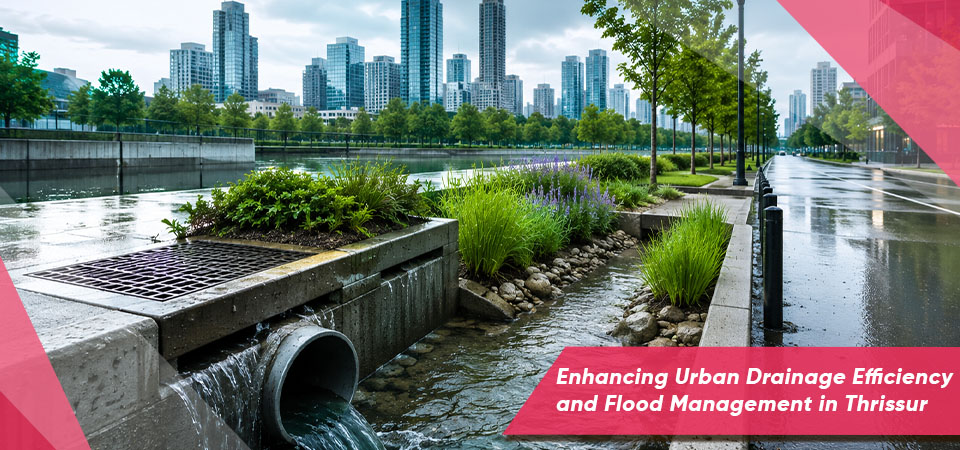
Thrissur, often called the “Cultural Capital of Kerala,” has witnessed rapid urbanization over the past decade. As real estate market trends in Thrissur continue to shift toward modern mixed-use developments, the critical challenge of managing urban water systems has become central to sustainable city planning. Effective drainage infrastructure is no longer just a municipal concern; it’s a vital feature that premium property developers must prioritize when planning residential and commercial projects.
Flooding in urban areas doesn’t just disrupt daily life; it poses significant risks to property values, resident safety, and urban development prospects. Understanding how modern drainage systems work and their importance to urban planning helps both property buyers and builders make informed decisions.
The Drainage Challenge in Thrissurs Urban Growth
Thrissur’s geography presents unique drainage challenges. The district experiences substantial monsoon rainfall, and rapid construction has reduced natural water percolation areas. Traditional open drains and outdated stormwater systems struggle to handle peak discharge during heavy downpours. This creates flooding in low-lying residential areas and commercial zones.
Modern builders in Thrissur now recognize that integrated stormwater management systems are essential for long-term project viability. Apartments in Thrissur developed in recent years increasingly feature advanced drainage solutions from permeable pavements to rain gardens and subterranean retention tanks.
Key Components of Modern Urban Drainage Systems
Stormwater Collection and Segregation
Contemporary drainage systems separate stormwater from sewage. This dual-system approach prevents contamination and allows stormwater to be treated and reused. Smart construction practices capture rainwater in underground channels designed to handle century-level rainfall events, protecting residential and commercial infrastructure.
Permeable Infrastructure
Innovative urban design incorporates permeable surfaces in parking areas, walkways, and open spaces. These surfaces allow water to infiltrate the ground naturally, reducing surface runoff by 50-70%. This approach also supports groundwater recharge and aligns with environmental conservation goals.
Retention and Detention Ponds
Many premium residential complexes now include artificial ponds and wetlands that serve dual purposes: aesthetics and water management. These features temporarily hold excess stormwater, allowing it to percolate gradually while creating recreational spaces, a hallmark of sustainable property development.
Sustainable Urban Living and Environmental Responsibility
Today’s homebuyers increasingly care about environmental impact. Builders promoting a zero-waste lifestyle go beyond traditional construction practices, implementing comprehensive water management as part of their overall sustainability strategy. Easy waste management combined with efficient drainage creates residential communities that minimize environmental footprint.
Developing apartments with integrated stormwater solutions directly contributes to reducing flooding in surrounding areas, protecting not just the property owners but the entire neighborhood. This creates tangible value for residents who benefit from:
- Reduced basement flooding and seepage
- Improved water quality through natural filtration
- Enhanced groundwater levels
- Lower maintenance costs long-term
- Increased property resilience during extreme weather
Municipal Coordination and Regulatory Requirements
Thrissur Municipal Corporation has updated building codes to mandate comprehensive stormwater management plans for new developments. All new construction must demonstrate how onsite drainage will integrate with existing municipal systems. This regulation ensures that new buildings contribute to, rather than worsen, citywide flood management.
Proactive builders coordinate with municipal authorities to optimize drainage alignment and reduce pressure on overburdened public systems. This responsible approach has become a competitive advantage, with such properties commanding premium valuations.
Technology and Innovation in Drainage Management
Smart sensors and IoT devices now monitor water levels in real-time, alerting maintenance teams to potential issues before they become problems. Automated gates can direct excess flow during monsoons, and predictive analytics help municipal planners understand drainage patterns and plan infrastructure upgrades accordingly.
Varma Homes and similar forward-thinking developers integrate these technologies into their projects, ensuring residents enjoy both modern luxury and peace of mind regarding flood safety, particularly important given Thrissur’s monsoon climate.
Looking Forward: Urban Resilience and Growth
As Thrissur continues to develop, effective drainage systems will remain non-negotiable. Smart urban planning that incorporates resilient water management protects property investments, enhances livability, and supports sustainable growth.
For homebuyers evaluating properties in Thrissur, understanding drainage infrastructure should rank alongside location, amenities, and pricing. Choosing developments designed with comprehensive stormwater management ensures protection against flooding risks while contributing to environmental conservation.
The cities that thrive in coming decades will be those that treat water management not as an afterthought, but as foundational to urban design. Thrissur is moving in that direction, and the result is more resilient, sustainable, and valuable communities for all residents.
FAQs
Why is modern drainage infrastructure important for property buyers in Thrissur?
Modern drainage systems help prevent flooding, reduce waterlogging, and protect property value. They also improve groundwater recharge and ensure long-term sustainability, making them a crucial factor for buyers evaluating residential or commercial projects.
What are the key features of advanced urban drainage systems in new developments?
Advanced systems include stormwater and sewage separation, permeable pavements, rain gardens, retention/detention ponds, and underground storage tanks. Many projects also use smart monitoring technologies to manage water flow during heavy rainfall.
How do builders in Thrissur comply with municipal drainage regulations?
Builders must submit comprehensive stormwater management plans that integrate with the city’s drainage network. This includes designing onsite systems that reduce runoff, prevent flooding, and align with guidelines set by local authorities to support overall urban flood management.
Leave a Reply