Trivandrum (Thiruvananthapuram) is one of Kerala’s most preferred cities for apartment living. As more families choose an apartment in Trivandrum, construction quality has become a major factor for homebuyers. Among the most important construction processes, waterproofing plays a key role in protecting the building from moisture, leakage, and long-term damage.
Since Trivandrum experiences heavy rains during the monsoon and high humidity throughout the year, waterproofing is essential for every modern apartment project. In this blog, we will explore the waterproofing methods used in modern apartments in Trivandrum, why they matter, and what buyers should check before investing.
Why Waterproofing is Essential in Trivandrum Apartments
Waterproofing is not only about preventing visible leakage. It protects the structure from internal damage caused by continuous moisture absorption. Without proper waterproofing, an apartment can develop issues like:
- Ceiling leakage during the monsoon
- Damp walls and peeling
- Mold growth and bad indoor air quality
- Cracks in slabs and walls
- Rusting of steel reinforcement inside concrete
- Tile popping in bathrooms or balconies
- Increased maintenance costs in the long run
Most reputed builders in Trivandrum follow modern waterproofing practices to ensure apartments stay safe, clean, and durable for years.
Key Areas Where Waterproofing is Done in an Apartment
Before understanding methods, it is important to know where waterproofing is applied in an apartment in Trivandrum. The main areas are:
- Terrace or roof slab
- Bathrooms and toilets
- Kitchen and utility area
- Balcony and sit-out
- Basement parking (if available)
- External walls and window joints
- Water tanks (underground and overhead)
Each area requires a different type of waterproofing based on water exposure and structural design.
Waterproofing Methods Used in Modern Apartments in Trivandrum
Modern apartments use advanced materials and systems to provide better protection compared to traditional waterproofing. Below are the most commonly used methods.
1. Cementitious Waterproofing (Common in Bathrooms)
Cementitious waterproofing is one of the most widely used methods for wet areas such as bathrooms, toilets, and sometimes kitchens. It is made using cement-based compounds mixed with waterproof additives.
Best suited for:
- Bathrooms
- Toilet floors and walls
- Kitchen floors
Advantages:
- Easy to apply
- Strong adhesion to concrete
- Cost-effective
- Works well for internal areas
Limitations:
- Less flexible
- Not ideal for areas with major slab movement or cracks
In many projects, builders in Kerala apply cementitious coating before tiling and conduct water ponding tests to confirm there is no leakage.
2. Liquid Membrane Waterproofing (Modern and Flexible)
Liquid membrane waterproofing uses a liquid chemical coating that forms a seamless waterproof layer after drying. It is commonly polyurethane-based or acrylic-based.
Best suited for:
- Terraces
- Balconies
- Wet areas with risk of small cracks
Advantages:
- Highly flexible
- Covers hairline cracks
- Seamless finish
- Suitable for complex surfaces
Limitations:
- Requires skilled application
- Surface preparation must be perfect
This method is considered a modern option for apartments where long-term performance is expected.
3. APP Membrane Waterproofing (Best for Terraces)
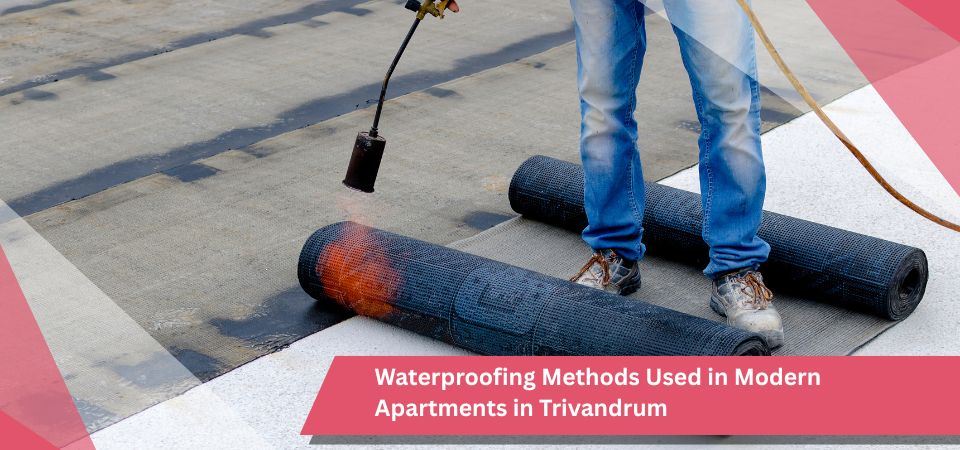
APP membrane waterproofing (Atactic Polypropylene membrane) is a sheet-based method. It is usually torch-applied to the terrace slab. It is one of the strongest waterproofing methods used in modern apartments.
Best suited for:
- Terrace roofs
- Podium slabs
- Basements (in some cases)
Advantages:
- Strong resistance against rainwater
- Long life (often 10+ years)
- Good for flat terraces
Limitations:
- Requires expert torch application
- Proper finishing and slope is mandatory
Most premium apartment projects in Trivandrum prefer APP membrane for roof slabs because it handles heavy monsoon conditions well.
4. Crystalline Waterproofing (Deep Concrete Protection)
Crystalline waterproofing works by reacting with moisture in concrete and forming crystals inside the pores. These crystals block water movement within the concrete.
Best suited for:
- Basement slabs and walls
- Water tanks
- Foundations
- Areas exposed to groundwater pressure
Advantages:
- Works from inside the concrete
- Long-lasting protection
- Reduces future seepage risk
Limitations:
- Needs a correct mix ratio and professional execution
This method is increasingly used by leading builders in Trivandrum, especially in basement-level construction.
5. Bituminous Waterproofing (Traditional but Effective)
Bituminous waterproofing includes bitumen-based coatings or bituminous membranes. It is one of the older methods, but still used in certain areas.
Best suited for:
- Foundations
- Retaining walls
- Low-exposure surfaces
Advantages:
- Strong water resistance
- Budget-friendly
Limitations:
- Not UV resistant
- Less preferred for open terraces
Many modern builders use this only in foundation areas where sunlight exposure is low.
6. Polymer Modified Mortar Waterproofing (Balcony and Utility Areas)
Polymer-modified mortar uses cement mortar mixed with polymers to improve flexibility and water resistance.
Best suited for:
- Balconies
- Utility wash areas
- Sit-outs
- External wet areas
Advantages:
- Better crack resistance than normal mortar
- Good bonding strength
- Suitable under tiles
Limitations:
- Needs a correct slope and drainage
This method is highly useful for balconies, where rainwater exposure is continuous.
7. Joint and Crack Sealing (Most Important Finishing Work)
Even the best waterproofing system can fail if joints are not sealed properly. Modern apartments in Trivandrum use sealants like:
- Polyurethane sealant
- Silicone sealant
- Epoxy grouting in wet zones
Best suited for:
- Window corners
- Pipe joints
- Expansion joints
- External wall cracks
Proper joint sealing is one of the most important waterproofing steps for reducing future seepage issues.
Quality Tests Done Before Handover
For a truly waterproof apartment in Trivandrum, builders should do testing before handing over. Common tests include:
Water Ponding Test
Water is stored in bathrooms or terraces for 24–48 hours to check seepage.
Plumbing Pressure Test
Pipes are tested for pressure leaks before wall closing and tiling.
Terrace Slope Inspection
Ensures rainwater flows to drainage points and does not collect on the slab.
Tips for Buyers: How to Choose a Waterproofed Apartment in Trivandrum
If you are planning to buy an apartment, use this checklist:
- Ask the builder which waterproofing method is used on the terrace
- Confirm waterproofing warranty and coverage
- Inspect bathrooms for dampness marks
- Check external walls for paint bubbles or cracks
- Ask if the ponding test report is available
- Check balcony drainage points
- Ensure the basement has proper drainage and a water exit system
Apartments built by reputed builders in Trivandrum usually offer better waterproofing systems and long-term reliability.
Conclusion
Waterproofing is one of the most important investments in apartment construction. In Trivandrum’s climate, high rainfall and humidity can cause serious water-related damage if waterproofing is not done properly. Modern apartments now use advanced methods like APP membranes, liquid coatings, crystalline waterproofing, and polymer systems for maximum protection.
If you are selecting an apartment in Trivandrum, it is always wise to choose a project that follows modern waterproofing practices and is backed by trustworthy builders in Trivandrum who focus on long-term building performance.
FAQ
Which waterproofing method is best for terrace slabs?
APP membrane waterproofing and polyurethane liquid membrane are commonly considered best for terrace slabs.
Is waterproofing required if the apartment is newly built?
Yes. Waterproofing is essential during construction. Waiting until leakage starts increases repair costs and damage.
Which areas need waterproofing the most?
Terrace, bathrooms, balconies, kitchen, utility area, basement, and external walls.
How long does waterproofing last in apartments?
Depending on the method, it can last 5 to 15 years. APP membranes usually last longer with proper maintenance.
What is the most common reason for leakage in apartments?
Poor slope design, low-quality materials, improper sealing of joints, and lack of testing before handover.
Leave a Reply