

Blog Detail
NRI’s Guide to Buying an Apartment in Kerala: Remote Booking, Documents and Smooth Handover
Posted onNov 23, 2026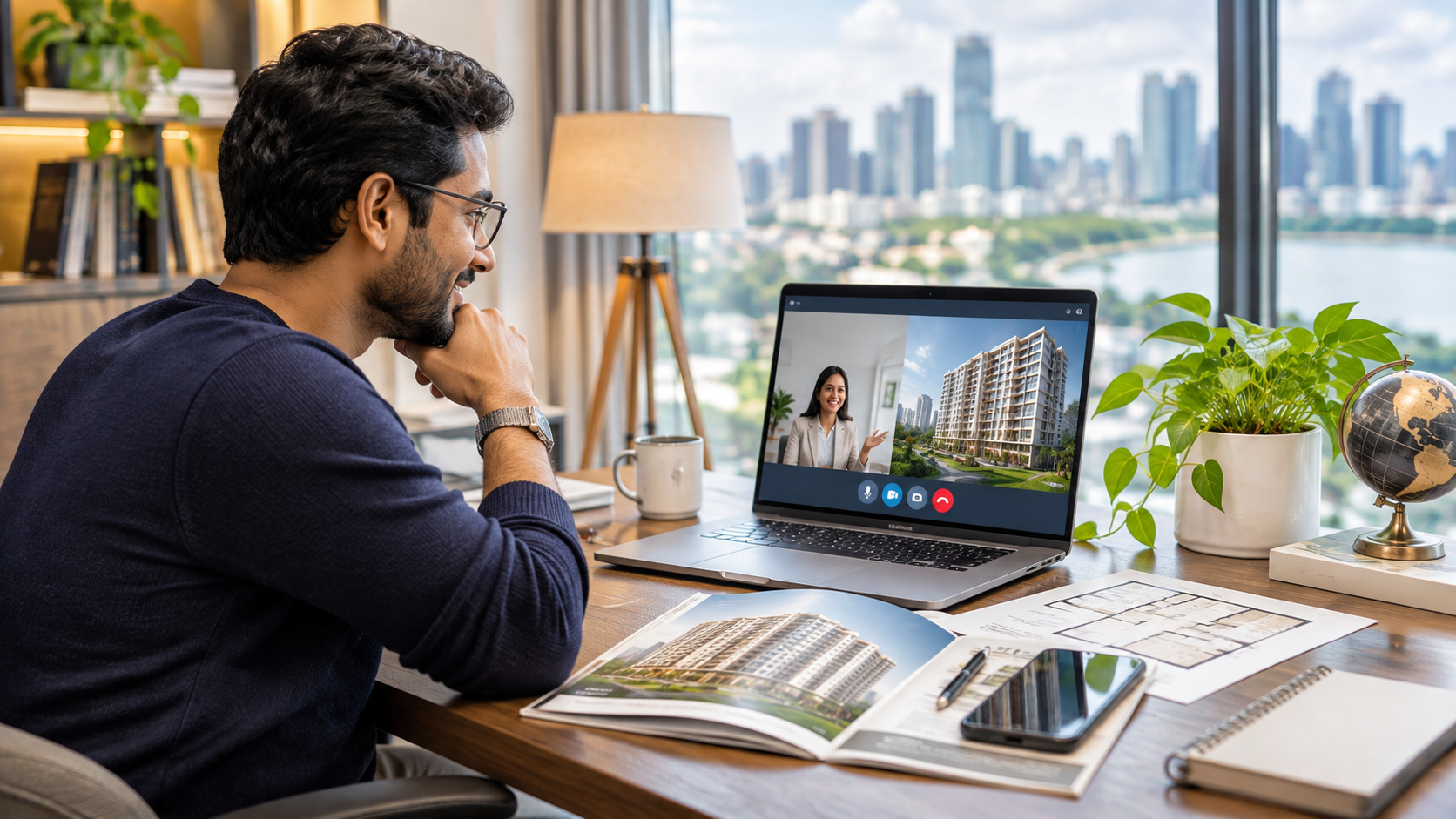
Picture this. It’s close to midnight in Doha, or Dubai, or Dallas. The shift was long, the tea has gone cold, and you’re still scrolling through floor plans of flats back home. Your mother asked again today when you’re coming, and you still don’t have an answer.
Good news first. Buying an apartment in Kerala while living abroad isn’t the maze it used to be, and a lot of it can happen from your phone. The catch is that a few steps still need real care, because mistakes made from a distance are hard to undo. So here’s how it works, in the order you’ll actually face it.
First, are you even allowed?
You are. NRIs and OCI cardholders can buy residential flats in India without any special RBI permission. What you can’t buy is agricultural land, a plantation or a farmhouse.
Payment is where people slip. The money must travel through the banking system, from your NRE or NRO account or as a remittance from your overseas account.
Don’t fall for the brochure
A glossy brochure shows you what the builder wants you to see. So do some digging of your own.
Start with the K-RERA registration. Every legitimate project has a number, and you can look it up on the official portal in a couple of minutes. Then ask for the title documents, the approved plan and the building permit.
Then there’s the site itself. Ask for a live video call from the plot, not a rendered fly-through. Better still, ask someone at home, a brother, an uncle, an old college friend, to walk the place on a Saturday morning. Have them look at the access road, how the water comes in, what’s being built next door. These small details turn the choice of an apartment in Kerala into a calm decision instead of a leap of faith.
Booking without boarding a flight
Most good builders today will take you through the process on video and accept payment by bank transfer. You’ll get a booking receipt, then a draft agreement for sale. This is the stage to slow down.
Read the payment schedule. Is it tied to construction progress, or is most of it front-loaded? Check the possession date, and see what the builder owes you if it’s missed. Make sure the carpet area is written plainly. A local lawyer’s review usually costs far less than the trouble a bad clause can cause.
Papers to keep ready
You’ll be asked for these again and again, so keep one folder on your laptop and one on paper:
- Passport and valid visa, or your OCI card
- PAN card
- Address proof, both overseas and in India
- A few passport-size photographs
- NRE or NRO account details
- Power of attorney, if someone else will sign for you
Power of attorney, and who gets it
Not everyone can fly in for registration day. That’s where a power of attorney helps, since it lets someone you trust sign for you. If it’s signed abroad, it normally has to be notarised and then authenticated, either through the Indian embassy or consulate or with an apostille, depending on the country.
Two tips. Keep it limited to this one flat instead of handing over sweeping powers. And choose the person carefully. Think of it as giving away your house keys, because in a way you are. If you can manage a short trip for registration, that’s still the simplest route.
The money side, plainly
Many Indian banks offer home loans to NRIs, though they’ll want salary proof and employment details from abroad. Remember that stamp duty and registration charges sit on top of the price, so look up the current rates before you fix a budget. GST usually applies to flats that are still under construction, while ready homes with a completion certificate normally don’t carry it. Tax and repatriation have their own rules, and a chartered accountant is worth the fee here.
Handover, the part nobody talks about
Handover day is when being far away hurts most, so plan for it. Ask for a pre-handover inspection and have your trusted person go through every room with a notebook. Write down what’s wrong, take photos, and get a date for fixing it.
Also check the completion certificate, the electricity and water connections, and how the owners’ association will run things, maintenance charges included. And if you’re not moving in straight away, find a property manager or a dependable tenant.
FAQs
Q. Can NRIs buy an apartment in Kerala?
Yes. NRIs and OCI cardholders can buy residential apartments in Kerala without special RBI permission, provided payment goes through proper banking channels.
Q. Can I buy an apartment in Kerala without visiting India?
Mostly, yes. Booking, paperwork and payments can be done remotely, and a valid power of attorney lets a trusted person handle the registration.
Q. Which documents does an NRI need to buy a flat in Kerala?
A passport, a valid visa or OCI card, PAN card, address proofs, photographs, bank account details, and a power of attorney if someone else will sign.
Q. Can an NRI get a home loan for a flat in Kerala?
Yes. Many Indian banks lend to NRIs, subject to income proof, credit checks and their own eligibility rules.
Q. How do I make sure the handover goes smoothly?
Ask for a pre-handover inspection, verify the completion certificate and utility connections, and send someone you trust to check the flat in person.
Ready to come home?
Varma Homes builds apartments across Kochi, Thrissur and Trivandrum, with clear documentation and a team that’s happy to guide NRI buyers from the first video call to the day the keys are in your hand. Get in touch with Varma Homes today, and let’s make finding your apartment in Kerala the easy part of coming home.