

Blog Detail
Solar Panels & Rainwater Harvesting: How Sustainable Apartment Design Drops Monthly Maintenance in Kerala
Posted onNov 06, 2026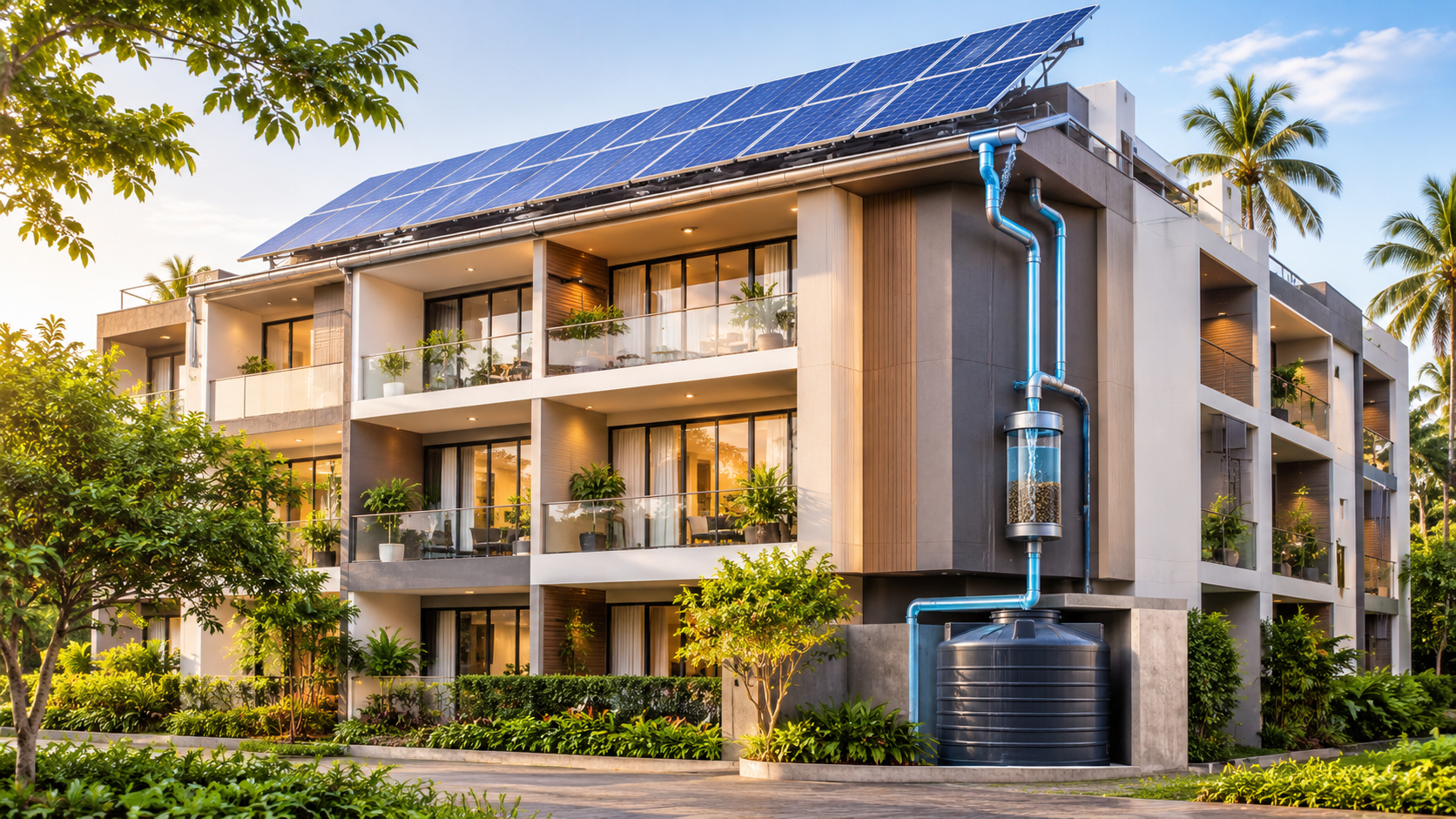
Ask any flat owner what they dread at the end of the month, and the EMI is rarely the answer. It's the maintenance bill. A lift that never rests, pumps that run twice a day, corridor lights glowing at noon, and a water tanker that turns up just when summer bites. None of it looks like much on its own. Together, it adds up.
Here's the encouraging bit. In apartments in Kerala, a big slice of that bill comes down to two things: power and water. And Kerala has plenty of both falling for free, sunshine on the roof and rain from the sky. Sustainable design simply puts them to work.
Where Does Your Maintenance Money Go?
Walk around any apartment complex and you'll spot the culprits. Common-area lighting, lifts, water pumps, security systems and the clubhouse all draw electricity through the day and night. Add tanker refills, borewell repairs and motor servicing, and the water side of the bill grows too. In many residential societies, electricity and water are among the heaviest recurring costs, and every flat shares them.
Cut those two, and the monthly figure moves. That's the whole idea.
Solar Panels: A Roof That Earns Its Keep
Most high-rise rooftops sit empty. Put solar panels there, and the space starts working. The power generated during the day can run common-area loads, from pumps to stairwell lights, so the building pulls less from the grid. Surplus units can go back to the grid under net metering through KSEB, which can trim the common electricity bill even further.
Kerala's sunshine is better than people assume. Yes, the monsoon brings cloud, but panels still produce some power on overcast days, and for the rest of the year they run at full stretch. Good panels typically last well over two decades, and a system often pays back its cost within a few years, depending on its size and how much power the building uses.
A solar water heating setup is a handy extra too: hot water for the clubhouse or gym without a power bill to match.
Rainwater Harvesting: Catching What the Sky Hands You
Kerala receives roughly 3,000 mm of rain in a typical year, and still, plenty of towns struggle for water by April. The rain isn't the problem. Most of it simply runs away.
Rainwater harvesting changes that. Water from the terrace is channelled through filters into storage tanks or recharge pits. Stored water can serve gardening, flushing, car washing and cleaning, so the building buys less water from outside. The rest seeps into the ground, topping up wells and borewells that would otherwise run low in summer.
Fewer tanker trips. Less strain on pumps. A garden that stays green in March. Residents notice all three.
Small Add-Ons That Make a Big Difference
- LED lighting with motion sensors in corridors and parking, so lights burn only when someone is there
- Sewage treatment plants that recycle water for landscaping
- Energy-efficient pumps and lifts that use less power for the same work
- Native, low-water plants in shared gardens
Each one trims a little. Alongside solar and harvesting, they make a building cheaper to run, year after year.
What to Check Before You Buy
Not every project that says "green" really is. Before you choose among apartments in Kerala, ask a few plain questions:
- How much of the common-area load does the solar system actually cover?
- Where does harvested rainwater go: storage, recharge, or both?
- Who maintains these systems, and for how long?
- Is the project registered with K-RERA?
Straight answers here tell you a lot about the builder.
Frequently Asked Questions
How do solar panels lower maintenance charges in apartments in Kerala?
Solar panels generate power for common areas such as lifts, pumps and corridor lights. The building then buys less electricity from the grid, so the shared bill drops and every flat owner pays a smaller monthly share.
Is rainwater harvesting compulsory in Kerala?
Kerala's building rules require rainwater harvesting in many new constructions. Requirements can vary by building size and local body, so it's wise to confirm the details with your builder before booking.
Do solar panels work during the Kerala monsoon?
Yes, though at lower output. Panels still generate some electricity on cloudy days, and they perform strongly through the sunny months, so the yearly total stays healthy.
What is net metering?
Net metering lets a building send extra solar power to the grid and receive credit for it. That credit is set against the electricity it draws later, which helps reduce the overall bill.
What makes apartments in Kerala low maintenance?
Features like rooftop solar, rainwater harvesting, sewage recycling and sensor-based LED lighting keep running costs down. Sound construction and a reliable builder also mean fewer repairs later.
Build Savings Into Your Home with Varma Homes
A home should feel good on the day you move in and on the day the maintenance bill arrives. If you're exploring apartments in Kochi and want a place that's thoughtful about how it uses power and water, talk to Varma Homes. Ask about sustainable features, visit a project, and see for yourself how smart design keeps everyday costs lower.
Reach out to Varma Homes today and take the first step towards a home that works as hard for your wallet as it does for your comfort.