

Blog Detail
The Science Behind Modern Construction: Why Solid Blocks Make Better High-Rise Homes
Posted onOct 27, 2026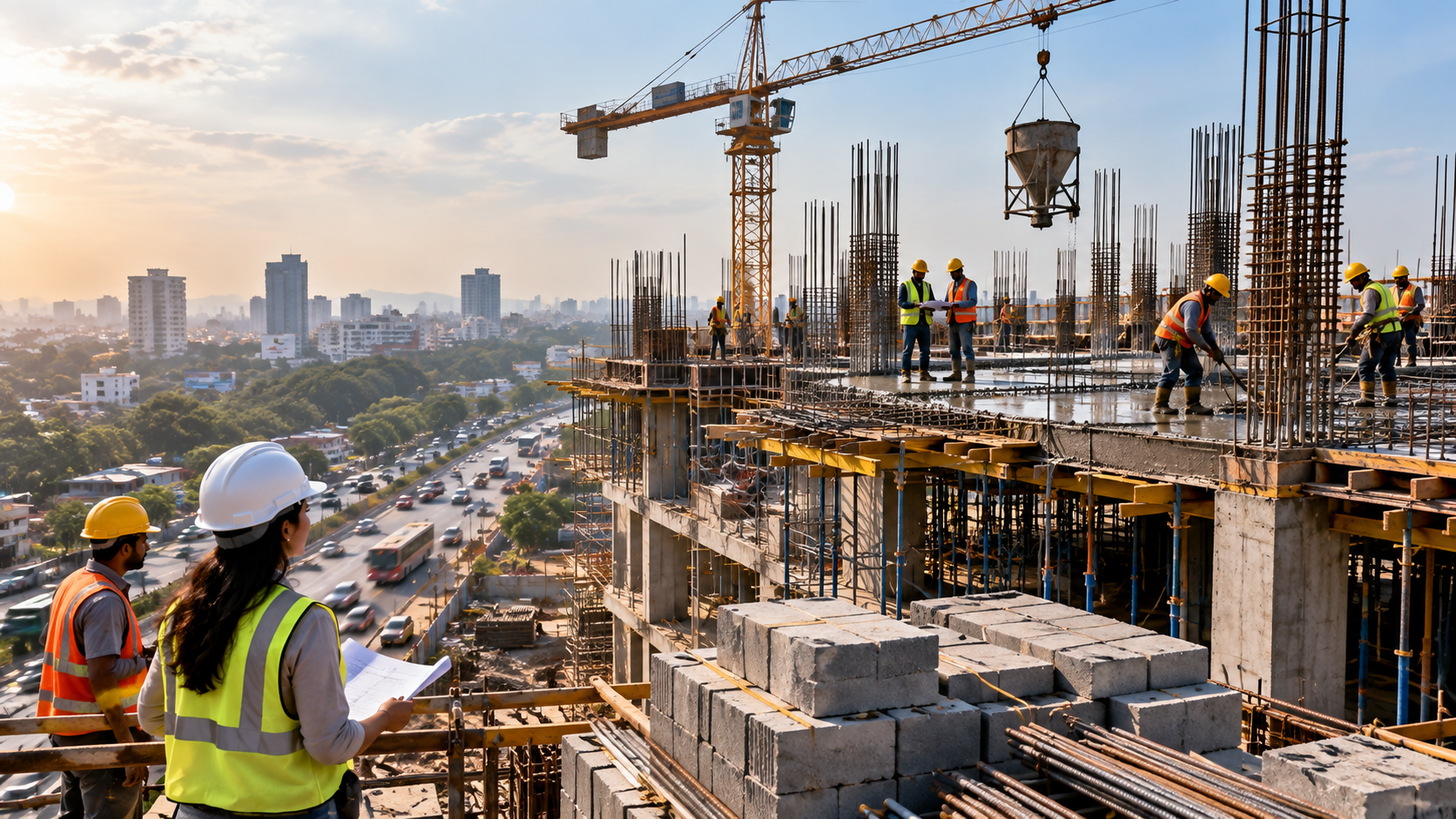
Next time you visit a flat, try something. Walk up to a wall, make a fist and knock. Don't be shy; the sales executive has seen it before. A dull, heavy thud feels very different from a slightly drummy, hollow sound, and that small difference says a lot about what's inside the wall.
Most buyers spend hours on layouts and amenities, then never think about the blocks behind the paint. They should. When you're living twenty floors above the ground, the humble block does more work than you'd guess.
First, What Actually Holds the Tower Up?
Let's clear up a common mix-up. In a high-rise, the skeleton is a frame of reinforced concrete: columns, beams and slabs. That frame carries the building's weight. Blocks fill the gaps and form your walls and partitions.
So blocks aren't the backbone. But they decide almost everything about how a home feels day to day: how quiet it is, how safe it is in an emergency, how hot it gets by four in the afternoon.
Why Density Changes Everyday Life
- Quieter rooms. Heavier walls stop more sound. Dense solid blocks help muffle the neighbour's television, the lift and the corridor chatter.
- Better fire protection. Concrete doesn't burn. A solid wall holds back flames and heat for longer than a thin or hollow one, which matters in a tower where many families share a floor. The exact time depends on thickness and finishing.
- Firmer fixings. Ever drilled for an AC bracket or a TV mount and hit empty space? In a solid wall, the screw has something to bite into.
- Slower heat build-up. Dense walls absorb heat gradually, so rooms warm up more slowly through Kochi's afternoons.
- Cleaner finish. Blocks of uniform size and strength tend to give neat joints and an even surface, which helps plaster stay put.
The Honest Trade-Off
Solid blocks aren't perfect. They're heavier, which adds to the building's dead load, so the structure must be designed for it from day one. Lightweight options such as AAC blocks have a loyal following for good reasons: they insulate well and are easier to handle on site.
There's no single winner. What matters is that the engineers chose the right block for each wall, and that the work is done carefully. Good mortar, proper curing and decent plastering matter as much as the block itself. A premium block laid badly will still disappoint you.
Kochi's Weather Asks Tough Questions
Our city throws salt-laden air, high humidity and months of monsoon at every building. Walls that soak up water invite damp patches, peeling paint and mould. Dense blocks generally absorb less water than porous ones, but they still need good plastering and external waterproofing to do the job.
In other words, a block that suits Kozhikode in March may not be the whole answer for Kochi in July. Local experience counts.
What to Ask Before You Book
You don't need an engineering degree. A few questions are enough to tell a thoughtful builder from a hurried one:
- Which blocks are used for external walls and which for internal partitions?
- How thick are the walls, and are the blocks tested before use?
- How are the joints between blocks and concrete treated to prevent cracks?
- What waterproofing is done on outer walls, terraces and bathrooms?
The best builders in Kochi won't mind these questions. Many actually enjoy them, because they've done the thinking and are proud of it.
Frequently Asked Questions
Why are solid blocks good for high-rise homes?
They're dense, which helps with sound insulation, fire resistance and secure fixings. In a high-rise, the concrete frame carries the load, while solid blocks improve how the walls perform.
Are solid blocks stronger than hollow blocks?
Generally yes, solid blocks have higher compressive strength than hollow ones of the same size. In tall buildings, though, the reinforced concrete frame does the heavy lifting.
Do solid blocks reduce noise in apartments?
Yes. Denser walls block more sound, so you'll usually hear less from neighboring flats and common areas.
What should I ask builders in Kochi about construction quality?
Ask about the type and thickness of blocks, how they're tested, how joints are treated and what waterproofing is used. Clear answers are a good sign.
Are solid blocks suitable for Kochi's humid climate?
They can be, because dense blocks tend to absorb less water. Proper plastering and waterproofing are still essential in our coastal, rainy weather.
Build Your Future on Solid Ground
A home is a long-term promise, and the walls are where it begins. Varma Homes lists impeccable quality and on-time delivery among its core promises, and its apartments span Kochi's well-known neighbourhoods. Visit a project, knock on the walls, ask your questions and see the difference yourself. Among the builders in Kochi, choose the one that welcomes your curiosity. Call +91 9645 88 33 33 or visit www.varmahomes.com to book a consultation.