

Blog Detail
Hidden Truth About UDS: What Builders Don’t Tell You in Trivandrum
Posted onAug 26, 2026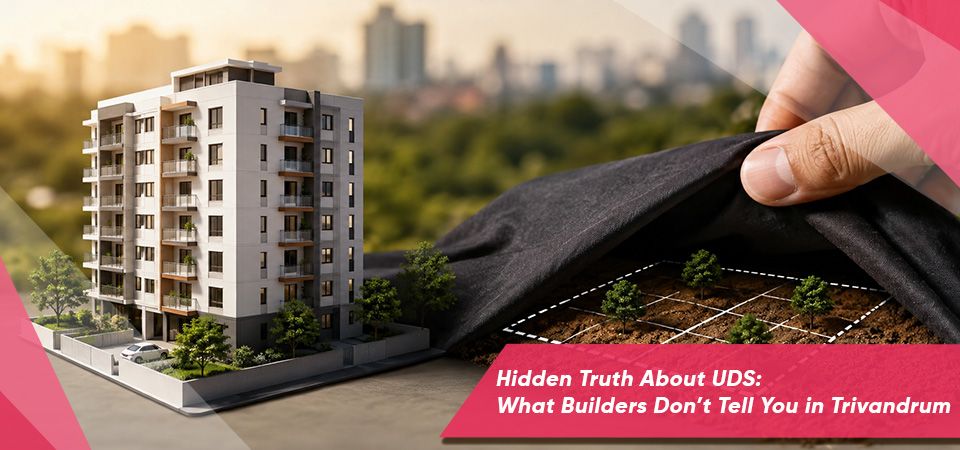
When buying property, most people compare location, apartment size, amenities, and price before making a decision. However, one important factor often receives less attention: Undivided Share of Land (UDS). For buyers exploring Real Estate Investment Strategies in Trivandrum, understanding UDS can reveal an important part of what they are actually purchasing and help them evaluate a property beyond its visible structure.
What Is UDS and Why Does It Matter?
UDS refers to the proportionate share of the land associated with an apartment. When you purchase a flat, you generally own the individual apartment along with an undivided share in the land on which the residential building is constructed.
You do not own a specific section of the land exclusively. Instead, the land is jointly owned by the apartment owners according to their respective shares.
For example, if a residential project is constructed on 10,000 square feet of land and your documents specify a UDS of 500 square feet, that figure represents your undivided ownership interest in the total land.
This distinction is important because the physical building may age over time, while the underlying land remains a significant component of the property's ownership value.
The UDS Figure Can Tell You More Than the Apartment Size
A common mistake among property buyers is focusing entirely on the size of the apartment. A 1,500-square-foot apartment may sound more attractive than a 1,200-square-foot apartment, but apartment size alone does not tell you how much land ownership is attached to the property.
UDS depends on factors such as the total land area, total built-up area, number of units, and the project's ownership structure.
Therefore, when comparing properties, buyers should look at both the apartment area and the corresponding UDS. This can provide a broader understanding of the property's underlying asset.
What Buyers Should Ask Builders
Not all buyers know which questions to ask before booking a property. Instead of simply asking about carpet area or built-up area, request clear information about the land share.
When dealing with Builders in Trivandrum, buyers should ask:
- What is the total land area of the project?
- What is the UDS assigned to the selected apartment?
- How was the UDS calculated?
- Is the UDS clearly mentioned in the sale agreement?
- Does the registered sale deed reflect the same information?
- Are there any encumbrances or title issues affecting the land?
- What happens to the land ownership in case of redevelopment or demolition?
Getting these details in writing is more reliable than depending on verbal explanations or marketing materials.
UDS and Future Redevelopment
One of the lesser-discussed aspects of UDS becomes relevant when a building reaches the end of its useful life. Residential structures require maintenance and may eventually need substantial reconstruction or redevelopment.
In such circumstances, ownership of the underlying land becomes particularly important. The apartment building is a physical structure, while the land represents the shared property on which that structure stands.
The rights and obligations associated with redevelopment will depend on applicable laws, agreements, title documents, and the arrangement among owners. Nevertheless, understanding your UDS gives you a clearer picture of your legal interest in the property.
UDS When Comparing Different Property Options
The decision between Plot Vs Apartment should involve more than comparing purchase prices.
A plot typically provides ownership of a defined parcel of land, while an apartment combines ownership of a private residential unit with an undivided interest in the project's land.
For buyers who prioritise convenience, security, amenities, and established residential communities, an apartment can be attractive. Those who prioritise direct land ownership and future construction flexibility may prefer a plot.
Understanding UDS allows apartment buyers to include the land component in this comparison instead of evaluating only the building.
Why UDS Matters for Smart Investing
Property investment should be based on the complete ownership picture rather than promotional features alone. Smart Investing involves examining the price, location, documentation, construction quality, maintenance costs, rental prospects, resale demand, and land component.
A buyer should also compare UDS across similar projects where possible. Two apartments with similar floor areas and prices may have different underlying land shares because of differences in project density and land size.
However, a higher UDS does not automatically make one property a better investment. Location, accessibility, infrastructure development, builder credibility, property condition, and market demand remain important considerations.
How Buyers Can Verify Their UDS
Before finalising a purchase, carefully review the sale agreement and registered documents. Check whether the UDS mentioned in the documents corresponds with the information provided by the developer.
If you are unsure about the calculation or legal wording, consulting a qualified property lawyer can be worthwhile. Professional document verification can help identify discrepancies, title concerns, or unclear ownership provisions before you commit significant funds.
For those comparing Flats in Trivandrum, this additional step can make the buying process more informed and transparent.
The Real Lesson About UDS
UDS is not merely a technical number mentioned in property paperwork. It represents an important part of apartment ownership and connects your individual home to the larger land parcel on which the project exists.
Before buying, look beyond the apartment's interiors, amenities, and advertised price. Understand the land, verify the documents, ask the right questions, and consider the property's long-term ownership structure.
A well-informed buyer is better positioned to understand what they are purchasing and make a confident real estate decision.
FAQs
What is UDS in an apartment?
UDS, or Undivided Share of Land, is the proportionate share of the total land associated with an apartment. It is jointly owned by apartment owners and is usually specified in the sale deed and other property documents.
Why is UDS important when buying an apartment?
UDS helps buyers understand their ownership interest in the land beneath the residential project. Since the building may require redevelopment or reconstruction in the future, knowing your UDS can be important when evaluating the property's long-term ownership value.
How can I verify the UDS of an apartment?
Buyers should check the UDS mentioned in the sale agreement and registered sale deed and compare it with the details provided by the developer. If there is any uncertainty, consulting a qualified property lawyer can help verify the documents and ownership details.