

Blog Detail
Investing in Property or REITs in Trivandrum: What Should You Choose?
Posted onSep 07, 2026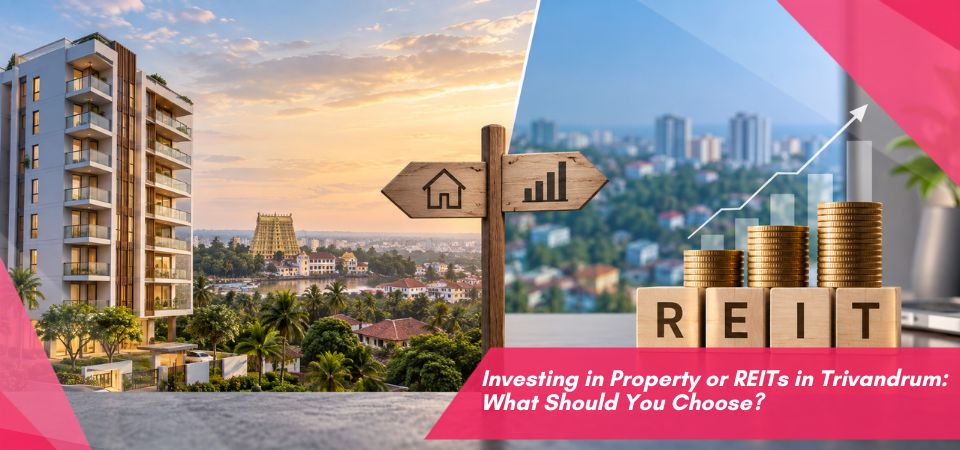
When exploring Real Estate Investment Strategies in Trivandrum, investors often face a key decision: should they purchase a physical property or invest in Real Estate Investment Trusts (REITs)? Both options provide exposure to the real estate sector, but they differ significantly in terms of investment size, liquidity, income potential, management, and risk. Understanding these differences can help investors choose an option that aligns with their financial goals and lifestyle.
Understanding Property Investment in Trivandrum
Buying a property means owning a physical asset such as an apartment, villa, or plot. Trivandrum’s expanding infrastructure, employment opportunities, educational institutions, and connectivity have made the city attractive to both homebuyers and investors.
Physical property can provide multiple benefits. Investors may earn rental income, benefit from long-term capital appreciation, and eventually use the property themselves. Ownership also provides greater control over decisions involving renovation, leasing, and resale.
For families, property ownership can have an emotional as well as financial value. A well-selected home can become part of Generational Wealth, allowing an asset to be passed on to children or other family members.
However, property investment requires substantial upfront capital. Buyers must also account for registration charges, taxes, maintenance, repairs, insurance, and other ownership costs. Selling a property can also take considerable time compared with financial securities.
What Are REITs?
A REIT allows investors to gain exposure to income-generating real estate without purchasing an entire property themselves. REITs pool money from multiple investors and invest in real estate assets, with listed REIT units available for trading on stock exchanges.
In India, REITs operate under the regulatory framework of the Securities and Exchange Board of India (SEBI). Investors can refer to SEBI’s official REIT regulations and investor information for authoritative details about the structure and regulatory requirements.
One of the biggest advantages of REITs is accessibility. Instead of committing several lakhs or crores to a single property, an investor can buy REIT units according to their investment capacity. This makes real estate exposure more accessible to individuals who may not be ready for direct property ownership.
REITs can also provide liquidity because listed units can generally be bought or sold through the stock market during trading hours. This is considerably different from physical property, where finding a buyer and completing a transaction can take weeks or months.
Property vs REITs: Key Differences
Investment Amount
Physical property generally requires a large initial investment, along with additional transaction and ownership costs. REITs allow investors to start with a much smaller amount.
Liquidity
Property is relatively illiquid. Selling a house or apartment involves finding a buyer, negotiating the price, completing documentation, and handling registration procedures.
REIT units, being exchange-traded securities in the listed structure, generally offer easier entry and exit.
Income Potential
A property investor can earn rental income, while also potentially benefiting from appreciation in the property's market value. However, rental income depends on occupancy, tenant quality, location, and maintenance.
REIT investors may receive distributions generated from the underlying real estate portfolio. Returns, however, are not guaranteed, and the market price of REIT units can fluctuate.
Management Responsibilities
Owning property means dealing with tenants, maintenance, repairs, vacancies, documentation, and other practical responsibilities.
REIT investors do not have to manage individual buildings or tenants. Professional managers handle the underlying portfolio, making REITs suitable for investors seeking a more hands-off approach.
Control and Personal Use
Direct property ownership offers something REIT investment cannot: personal use. Someone Building Your Dream Apartment can choose the layout, interiors, location, and features according to their preferences.
REIT investors own units rather than a specific home, so they have no personal right to occupy the underlying properties.
What About Trivandrum’s Property Market?
Trivandrum offers a variety of residential opportunities, ranging from compact apartments to premium homes and villas. Buyers considering flats in Trivandrum should evaluate location, connectivity, construction quality, amenities, developer reputation, rental demand, and future infrastructure before making a decision.
Working with established Builders in Trivandrum can also help buyers compare projects, understand specifications, and evaluate the long-term suitability of a property. However, investors should conduct independent due diligence rather than relying solely on promotional claims.
For investors focused on commercial real estate exposure, REITs may offer diversification across multiple income-generating properties instead of concentrating capital in one residential asset.
Which Option Should You Choose?
The right choice ultimately depends on your financial objectives.
Choose physical property if:
- You have sufficient capital for the purchase and associated costs.
- You want a tangible asset.
- You are interested in rental income and potential appreciation.
- You may want to use the property personally.
- You are comfortable with long-term ownership and management responsibilities.
Consider REITs if:
- You want real estate exposure with a smaller investment.
- Liquidity is important to you.
- You prefer professional management.
- You want to diversify rather than own one individual property.
- You are comfortable with market-linked price fluctuations.
Investors should also consider their investment horizon, risk tolerance, cash-flow requirements, taxation, financing costs, and overall portfolio before choosing between the two.
Conclusion
There is no universally superior choice between direct property investment and REITs. Each serves a different purpose. Physical real estate may suit investors seeking ownership, potential rental income, personal use, and long-term asset creation, while REITs can provide a more accessible and liquid way to participate in real estate.
The best decision is one that fits your financial capacity, investment horizon, risk appetite, and long-term objectives. Careful research and due diligence can make the investment journey more informed and sustainable.
FAQs
Is investing in property better than REITs in Trivandrum?
It depends on your goals. Property offers direct ownership and potential rental income, while REITs provide easier liquidity, lower entry costs, and professional management.
Are REITs a good option for first-time real estate investors?
REITs can be suitable for investors who want real estate exposure without the large capital requirement and management responsibilities associated with buying physical property.
What should I consider before buying property in Trivandrum?
Consider location, connectivity, rental demand, property appreciation potential, construction quality, developer reputation, total costs, and your long-term financial objectives.