

Blogs
Kitchen Makeover Ideas in Thrissur: Transform Your Cooking Space
Posted on Sep 30, 2026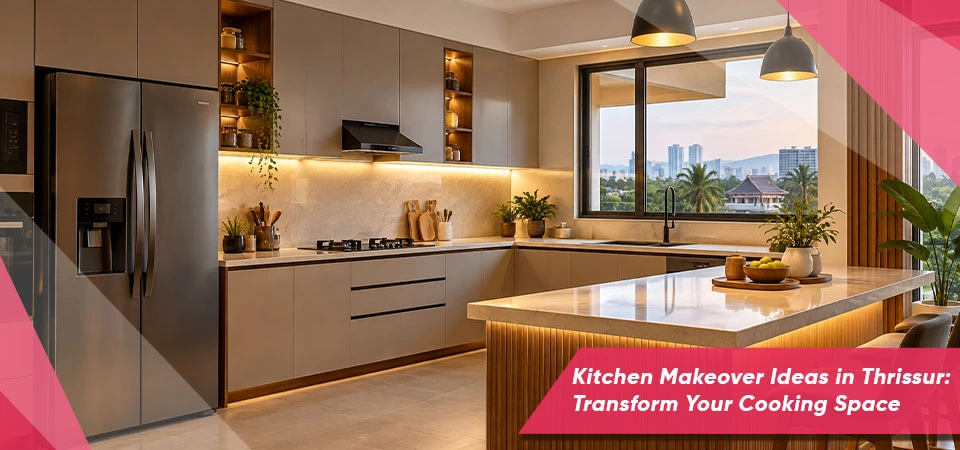
The kitchen is the first room buyers notice and the one your family uses the most. Kitchen makeover ideas that focus on layout, lighting, and easy-to-clean surfaces can transform a tired cooking space without major structural work. For owners of Apartments in Thrissur, where floor plans are compact and well defined, small changes deliver the biggest daily returns. Quick Diagnosis The blog is aimed at making changes to an apartment kitchen in Thrissur with respect to layout, storage, lighting, ventilation, materials used, and healthy kitchen designing. Apart from this, the blog makes a connection between the mentioned improvement and the trends of the real estate market in Thrissur along with the demands of modern buyers of houses. Why the Kitchen Decides How a Home FeelsKitchen Makeover Ideas That Fit a Thrissur ApartmentLight the Work Surface, Then the RoomDesigning for a Healthier KitchenWhat New Thrissur Projects DeliverConclusionFrequently Asked Questions Why the Kitchen Decides How a Home Feels Buyers in Thrissur increasingly judge a home by its kitchen before anything else. Real Estate Market Trends in Thrissur show that finished, functional kitchens are now an expectation rather than a bonus, with modular storage and open layouts at the top of every checklist. A modest, well-executed upgrade does more for a property's appeal than an expensive renovation in a rarely used room, because the kitchen signals how well the whole home has been maintained. The same thinking applies across the state , see our kitchen design guide for Kochi apartments for how the pattern plays out there. For investors, a kitchen that photographs well also shortens the time a listing spends on the market, a quiet advantage in any season. Kitchen Makeover Ideas That Fit a Thrissur Apartment Start with the working triangle: keep the hob, sink, and refrigerator close together to cut wasted movement. Vertical storage, pull-out cabinets, and a corner carousel free up counter space without knocking down a single wall, which matters in a Thrissur flat where every inch is measured. Choose humidity-resistant backsplashes and finishes that wipe clean, because the region's rains and heat punish surfaces that trap moisture. Even two or three of these changes , a new countertop, soft-close drawers, better handles , make the room feel rebuilt. Light the Work Surface, Then the Room Lighting Ideas change how a kitchen feels more than any other single upgrade. Under-cabinet task lights brighten the work surface, while a warm pendant over the sink or breakfast counter sets the mood in the evening. Layer a bright ceiling light for prep work with warmer accents for dining, and pick LED strips that stay cool through Kerala's summer heat. Good light also makes a compact kitchen look larger, which is why it pays for itself before you spend anything on paint. Where a kitchen faces north or east, morning light lands on the countertop for free; where it does not, a daylight-toned LED strip under the cabinets closes the gap. Designing for a Healthier Kitchen Healthy Living starts with materials and air. Marine-grade ply and melamine-faced boards resist the humidity that swells untreated wood, while quartz and granite tops handle hot pans without staining. A powerful chimney and a well-placed exhaust keep grease and moisture off cabinets, and natural light with cross-ventilation keeps the room fresh through the monsoon. These choices protect the family and the kitchen itself, and they cost no more than materials that fail in a few years. During the monsoon, when windows stay shut for days, the chimney and exhaust matter even more, because trapped steam is what makes cabinet edges swell. What New Thrissur Projects Deliver Builders in Thrissur now ship homes with kitchens designed around these principles, so a makeover is often an upgrade rather than a rebuild. Varma Haven at Chelakottukara (K-RERA/PRJ/TSR/064/2026) offers 2 and 3 BHK apartments of 1172–1637 sq ft across 72 units, and Downtown by Varma near Swaraj Round (K-RERA/PRJ/TSR/110/2024) adds 2/3 BHK options from 1140 to 1747 sq ft. Before you renovate or buy, know your rights and duties under the Kerala RERA, and plan the budget with our home loan EMI calculator to see what a makeover costs per month. Conclusion Whatever the size of your kitchen, the goal is the same: a space that works hard every day and still feels welcoming. Start with lighting, storage, and surfaces, plan the budget first, and the room will reward you at every meal. Small, well-chosen upgrades compound over time , brighter task light, drawers that close softly, counters that wipe clean. Done in the right order, the kitchen becomes the room your family gathers in and the one buyers remember, and that is a return that lasts well beyond resale. Frequently Asked Questions How much does a kitchen makeover cost? Costs vary widely with materials and scope, so the honest answer is that a refresh can be as modest or as extensive as the budget allows. The highest-impact spending order is paint and hardware first, then lighting, then the countertop and cabinets. What is the fastest way to refresh a kitchen? A fresh coat of paint, new handles, and brighter task lighting change the room in a weekend. These are the cheapest fixes and the ones guests and buyers notice first. Do kitchen upgrades increase an apartment's resale value? Yes , the kitchen is the first room most buyers inspect, so a well-maintained kitchen lifts both the asking price and the speed of the sale. Buyers treat it as proof of how the whole home has been cared for.
Read MoreVarma Haven: The New Standard of Premium Living in Thrissur
Posted on Sep 27, 2026
Varma Haven is Varma Homes' newest launch in Thrissur, and it arrives with a clear promise: premium living without compromise. The single tower at Chelakottukara spans a 72.5-cent plot with ground plus 14 floors, holding 72 units of thoughtfully planned 2 and 3 BHK apartments from 1172 to 1637 sq. ft. Its K-RERA registration meeting real estate market trends in Thrissur, K-RERA/PRJ/TSR/064/2026, puts every commitment on the public record before you pay a rupee. Built to a Higher Standard What sets this project apart is how the building is put together by builders in Thrissur. The reinforced cement concrete structure is earthquake-resistant for Zone 3, with solid-block walls, vitrified tile flooring, UPVC sliding windows, and concealed plumbing and wiring throughout. Every flat has provision for air conditioning in all bedrooms, modular switches, an independent KSEB meter, and telephone and TV points in the living room. These are details buyers usually pay extra for after booking. At this project, they are part of the standard specification Living at Varma Haven The amenity list reads like a resort brochure, and this time the brochure is accurate. Residents get a swimming pool with a kids' pool, an AC health club, a yoga space, a library, indoor games, an open gym, a children's play area and an elders' corner. Outside, a landscaped terrace party area and ample green space sit alongside practical additions: rainwater harvesting, a common-area solar system, a water treatment plant, EV charging provision, and 24-hour power and water with two lifts on generator backup. Security runs to round-the-clock surveillance, biometric and digital door locks, and firefighting facilities. For buyers comparing luxury flats in Thrissur, that mix of recreation and security is what separates a home from a house. Why Thrissur Keeps Growing Thrissur is the cultural capital of Kerala, but its property market is driven by something steadier than festivals. The city anchors strong banking and bullion businesses, hosts the InfoPark, and draws families with its schools, hospitals and jewellery manufacturing. That foundation keeps real estate market trends in Thrissur pointed in one direction: demand for well-located, well-built homes. Varma Haven sits at Chelakottukara with access to the city's main corridors, close to the institutions and hospitals working families actually use. A Registered New Launch Worth Your Attention This is also where Varma Haven earns its place as a good investment option. New launches price apartments before the project completes, which is exactly when the value gap is widest. The K-RERA registration K-RERA/PRJ/TSR/064/2026 means the promoter's obligations are filed with the Kerala Real Estate Regulatory Authority, and the authority publishes the duties of allottees so you know what is required on your side before you sign. Varma Homes has built its name on on-time delivery and after-sales service, with 16+ projects completed and memberships in CREDAI, BAI and IGBC. For serious builders, RERA registration is the minimum. For buyers, it is the difference between a promise and a contract. Run the numbers with the EMI calculator before you visit the site knowing your monthly outgo at different rates makes the negotiation easier. Flats in Thrissur are not hard to find. What has been hard to find is a new launch that combines resort-grade amenities, verified documentation and a builder with a delivery record. Varma Haven is that combination. See the project page for floor plans and specifications, compare it with other residential projects in Kerala, and browse apartments in Thrissur to see how it fits the market. The Bottom Line Thrissur's buyers have waited for a New Launch that combines resort-grade amenities, verified documentation and a builder with a proven delivery record. This project delivers exactly that: 72 units of 2 and 3 BHK apartments from 1172 to 1637 sq. ft., a full amenity stack, and K-RERA registration on file. Start here to review the floor plans, read about the company's track record, and book a consultation to walk through the options while the launch phase lasts. More guidance for first-time buyers lives on the Varma Homes blog. Frequently Asked Questions What is Varma Haven? Varma Haven is a New Launch by Varma Homes at Chelakottukara, Thrissur a single tower of 72 units in 2 and 3 BHK configurations, sized from 1172 to 1637 sq. ft. It is registered with the Kerala Real Estate Regulatory Authority under K-RERA/PRJ/TSR/064/2026. Where is Varma Haven located? The project sits at Chelakottukara, Thrissur, with direct access to the city's main corridors and close to the schools, hospitals and institutions working families use daily. Chelakottukara is one of Thrissur's well-connected residential pockets, which keeps the location convenient for commuting and everyday needs. What configurations and sizes are available? Varma Haven offers 2 and 3 BHK apartments from 1172 to 1637 sq. ft. Each flat comes with AC provision in all bedrooms, modular switches, an independent KSEB meter, and telephone and TV points as standard.
Read MoreHow New Housing-Affordability Policies Could Influence Thrissur's Property Market
Posted on Sep 24, 2026
New Housing-Affordability policies are quietly changing how families in Thrissur buy their first home. From the subsidy pipeline of the Pradhan Mantri Awas Yojana (Urban) to a calmer interest-rate cycle, the real cost of owning an apartment is shifting in ways that reward buyers who plan ahead. This guide looks at what the policy push actually changes, where the savings come from, and what to verify before you commit to Real Estate Market Trends in Thrissur. Table of contents How New Housing-Affordability Policies Reach Thrissur Buyers How the Credit-Linked Subsidy Lowers Your EMI Interest Rates, Home Loans and Buying Power The RERA Factor: Documentation That Protects Buyers What This Means for Thrissur's Market Questions Buyers Ask Us The Bottom Line How New Housing-Affordability Policies Reach Thrissur Buyers India's housing policy has spent the last decade pushing affordability through the Pradhan Mantri Awas Yojana (Urban). The official PMAY portal shows the scale: 127.68 lakh houses sanctioned, 121.03 lakh grounded and 99.07 lakh completed, with ₹2.12 lakh crore of central assistance committed. The component that touches home buyers directly is the Credit Linked Subsidy Scheme (CLSS), which reduces the interest a family pays on an eligible home loan. The subsidy is processed through the bank or housing finance company at disbursal, so the benefit lands inside the EMI itself rather than as a form to file later. For a city like Thrissur, where the mid-segment 2 and 3 BHK band carries most of the demand, that matters. How the Credit-Linked Subsidy Lowers Your EMI CLSS works by lowering the effective rate on a loan, which is why the monthly outgo drops even though the sticker price does not. A subsidy of a few percentage points on a twenty-year loan can cut thousands of rupees off the EMI, and that saving is what moves a family from renting to owning. For Apartments in Thrissur priced within the scheme's eligible limits, the calculation is straightforward: lower effective rate, lower EMI, and a shorter practical payback. Buyers should ask their lender whether their project and income band qualify before they sign, because the benefit is claimed through the lending institution, not the builder. Interest Rates, Home Loans and Buying Power Interest is the largest single cost in any home purchase, which is why the direction of rates dominates Real Estate Market Trends. The benchmark for every home loan in India is the RBI's policy stance, and the government securities market shows where borrowing costs are heading. The latest yields published on the RBI homepage put the 6.20% GS 2029 at about 6.57% and the longer 6.94% GS 2036 at roughly 7.06%, a band that points to a calmer cost of funds than earlier cycles. When long-term yields ease, home loan rates follow with a lag, and that slowly widens the pool of buyers who can afford a purchase. The practical move is to run the numbers on an EMI calculator before you visit sites, so you know exactly what a given rate means for your monthly budget. The RERA Factor: Documentation That Protects Buyers Affordability policies improve the maths of buying, but they do nothing for the paperwork, and that is where Kerala's Real Estate Regulatory Authority earns its keep. Every project must carry a K-RERA registration number, and the authority publishes the duties of allottees that define what buyers must complete on their side, from timely payments to the documents required at registration. Serious Builders in Thrissur display their RERA numbers on every project page and link the approval so you can verify it yourself. A registered project also puts the promoter's obligations on record, which is the real protection when you are committing a decade of EMIs. What This Means for Thrissur's Market Policy support rarely cuts prices; it widens the number of people who can buy, and that shifts what developers build. Thrissur's pipeline is already leaning toward 2 and 3 BHK configurations in the 1,100 to 1,750 square foot range, from projects like Varma Haven to Downtown by Varma, sizes that sit neatly inside the affordable band. The result is that Living in Luxury Apartments, with the amenities and finish buyers expect, is becoming a realistic goal for a wider band of families rather than a stretch. For investors, the signal is equally clear: the demand base is growing at the entry and mid levels, which supports absorption and resale depth. Families who save on the EMI often channel the difference into practical budget-conscious upgrades that add value before the first resale. Browse the current listings on our Thrissur project hub and the full residential-projects portfolio to see the shape of the pipeline yourself. The Bottom Line Affordability policy does not change what a home costs to build, but it does change what a home costs to carry from Renovation Ideas to maintainence. Between the CLSS subsidy, a calmer interest-rate environment and the protections K-RERA puts on paper, the window for Thrissur families to buy well is genuinely wider than it was a few years ago. The work is on the buyer's side: verify the registration, run the EMI numbers, and compare projects with a clear list of what you need. Talk to our team or read more on our blog to see what fits your budget today. Questions Buyers Ask Us Does the CLSS subsidy apply to resale apartments? The Credit Linked Subsidy Scheme is structured around new housing, so confirm with your lender whether your project and income band qualify before assuming the benefit. Will affordability policies push apartment prices down? Not directly. Subsidies and softer rates expand the buyer pool; prices in a market like Thrissur respond to demand, land cost and construction input costs. The realistic outcome is faster absorption and steadier resale value, not a price cut. What should a Thrissur buyer verify before booking? Three things: the K-RERA registration number, the project's sanctioned plan and the builder's delivery record. All three are public and checkable, and all three belong on your checklist before any advance payment.
Read MoreThrissur Property Market 2026: Rising Prices, Limited Inventory and New Rules for Landlords
Posted on Sep 21, 2026
Thrissur in 2026 is at a crossroads that every property buyer, investor, and landlord in Kerala is watching closely. The cultural capital is no longer just the home of Pooram and ponnada , it is now one of the most tightly watched residential corridors in the state. Demand is firm, fresh supply is tight, and the regulatory frame around rentals is sharper than it has been in decades. Whether you are buying your first apartment, upgrading to a larger unit, or planning to let out a property, understanding the Thrissur Property Market today means reading the supply, the price curves, and the rulebook all at once and not just learning Real Estate Market Trends in Thrissur. Table of Contents Why the Market Is Heating Up in 2026 Limited Inventory Is Reshaping the Supply Side Price Trends, Interest Rates and Return Outlook New Rules for Landlords and Tenants in 2026 The Financial Case for Buying Early Varma Homes: Projects That Match the Moment Frequently Asked Questions Conclusion Why the Market Is Heating Up in 2026 Thrissur has always drawn buyers who want a city that functions like a large town , good schools, a banking hub, healthcare access, and a festival calendar that keeps the local economy active. In 2026, that appeal is showing up in property searches and site visits. The city’s infrastructure story is still running. Road upgrades, the continued expansion of medical and educational campuses, and the steady flow of Gulf-return investors are adding pressure to a market that was already short of premium land parcels in the centre. Apartments in Thrissur are seeing faster absorption timelines than a year ago, particularly in the 2 and 3 BHK segments that match the family-size profile of most enquiries. Limited Inventory Is Reshaping the Supply Side The most common complaint from buyers this year is not price , it is choice. High-quality, RERA-registered apartments for sale in Thrissur are moving off the market faster than new launches can replace them. Builders who secured approvals in late 2024 and early 2025 are now launching into a queue of pre-registered buyers. Inventory is tightest within a 4-kilometre radius of Swaraj Round and around the medical-college belt. Secondary markets in the outer ring are absorbing spill-over demand, but the price gap between inner and outer Thrissur is narrowing as infrastructure catches up. Price Trends, Interest Rates and Return Outlook Residential prices in central Thrissur have climbed steadily over the past eighteen months. While no aggregate index is published for the city alone, project-level pricing and carpet-rate negotiations both confirm the direction. Real Estate Market Trends in Thrissur point to a market where the bargaining power has shifted from buyer to seller on well-located, ready-to-occupy stock. On the funding side, the Reserve Bank of India has held the repo rate in a band that keeps home-loan EMIs within reach, though marginally higher than the lows of 2023. As of mid-September 2026, money-market call rates are in the 4.50–5.15% range, and 10-year government securities are yielding near 7%. That rate structure supports both construction finance and retail borrowing without over-heating the housing market. New Rules for Landlords and Tenants in 2026 Kerala still operates under the Kerala Buildings (Lease and Rent Control) Act, 1965. A state-level tenancy bill has been discussed through 2026 but has not been formally notified as law. What has changed is the enforcement clarity under K-RERA: during the promoter’s period, the duties of allottees are now clearly listed, and delayed delivery triggers defined compensation. For landlords letting older stock, the 1965 Act still governs rent escalation, eviction timelines, and deposit caps. The practical shift in 2026 is that rental transactions in new apartment projects are tighter on documentation , lease registration, society NOCs, and K-RERA compliance checks are becoming standard before a tenant moves in. Buyers who plan to let out a unit should verify that the project has handed over maintenance to the association and that the occupancy certificate is in place. That paperwork protects both rental income and resale valuation later. The Financial Case for Buying Early Buying into a constrained market is never comfortable, but the financial advantages are measurable. Early buyers in a limited-inventory cycle typically lock in prices before the next wave of launches resets the rate card. They also get a wider choice of facing, floor, and unit layout. For end-users, the savings come from avoiding a future jump in stamp duty and registration costs on a higher base price. For investors, rental yields in Thrissur have held stable because the tenant pool , medical students, banking transfers, and Gulf families , is predictable. A unit bought at today’s price, with a fixed-rate loan, starts cash-flow positive faster than a comparable purchase made after the next price revision. Varma Homes: Projects That Match the Moment Varma Homes has two active projects in the city’s residential orbit. Both are RERA-registered and positioned for buyers who want delivery certainty. Varma Haven at Chelakottukara is a new-launch project offering 2 and 3 BHK luxury flats in Thrissur. The super built-up area ranges from 1,172 to 1,637 square feet across 72 units in 14 floors. RERA reference: K-RERA/PRJ/TSR/064/2026. Downtown by Varma sits near Swaraj Round, closer to the commercial core. It is a work-in-progress project with 2 and 3 BHK units from 1,140 to 1,747 square feet. RERA reference: K-RERA/PRJ/TSR/110/2024. Both projects carry the structural and compliance standards that buyers now expect when they evaluate Builders in Thrissur. View the Thrissur hub for floor plans and price details, or use the home-loan EMI calculator to model your payment schedule. Conclusion The Thrissur Property Market in 2026 rewards buyers who move with information rather than impulse. Prices are climbing because demand is real and supply is constrained , not because of speculation. Interest rates remain within a manageable band, and the regulatory framework under K-RERA gives buyers more protection than they had five years ago. For landlords, the clarity is just as important: documented leases, registered projects, and compliant handovers protect rental income and long-term resale value. The cities that hold their value through cycles are the ones with disciplined supply, transparent rules, and steady local employment. Thrissur checks all three boxes. The question for buyers is not whether the market will hold , it is whether they will act before the best inventory is spoken for. Frequently Asked Questions Is it a good time to buy property in Thrissur in 2026? Yes , if you value certainty over bargain hunting. Inventory is limited, prices are rising, and interest rates are stable. Buyers who enter now lock in rates and get wider unit choice before the next wave of launches. What is driving the price rise in the Thrissur Property Market? A mix of infrastructure upgrades, Gulf-return investment, and a shortage of premium land parcels near the centre. The medical-college belt and Swaraj Round radius are seeing the tightest supply. Are there new rental laws for landlords in Kerala in 2026? No new Act has replaced the 1965 lease law yet. The shift is in enforcement clarity under K-RERA for new projects, and in tighter documentation expectations , registered leases, society NOCs, and occupancy certificates are now standard.
Read MoreNew FTC Junk Fee Rules: What Thrissur Homebuyers Should Watch in 2026
Posted on Sep 15, 2026
Buying a home involves more than comparing the advertised property price. For buyers following the real estate market trends in Thrissur, greater attention to transparency, additional charges, and the final cost of a transaction is becoming increasingly important. In 2026, discussions around the U.S. Federal Trade Commission’s (FTC) approach to so-called junk fees are also drawing attention to how housing-related charges are disclosed and explained. What Are the New FTC Junk Fee Developments? The FTC’s existing Rule on Unfair or Deceptive Fees took effect in May 2025. However, it is important for Thrissur buyers to understand that this rule does not currently function as a blanket regulation for residential property purchases in India. The existing rule focuses on deceptive fee practices in live-event ticketing and short-term lodging. In March 2026, the FTC also announced an Advance Notice of Proposed Rulemaking concerning potentially unfair or deceptive fee practices in the rental housing market. The proposal looks at issues such as total rent, mandatory fees, application fees, security deposits, and billing practices. For Thrissur homebuyers, the broader lesson is simple: always understand the complete cost before committing to a property. Look Beyond the Advertised Property Price A property's headline price may not represent the entire amount a buyer eventually spends. Depending on the project and transaction, buyers may need to account for registration-related expenses, taxes, maintenance deposits, documentation charges, parking costs, utility-related charges, and other applicable expenses. This makes a detailed cost sheet an important part of the buying process. Instead of asking only, “What is the price of this apartment?”, buyers should ask, “What will I actually have to pay before and after possession?” A transparent cost breakdown can make comparisons between different projects much easier. Ask Questions About Every Additional Charge One of the strongest lessons from the FTC's fee-transparency approach is that consumers should be able to understand what they are paying for. The FTC states that mandatory fees should generally be included in the displayed total price under the rule's scope, while excluded charges must be clearly disclosed before payment. Although those requirements should not be assumed to directly govern a property transaction in Thrissur, buyers can adopt the same principle. Before booking a home, ask the seller or developer: Is this charge mandatory or optional? What service does the fee cover? Is the amount one-time or recurring? Is it included in the quoted property price? Will any additional amount be payable at possession? Are there government charges that are separate from the quoted price? Getting these details in writing can reduce confusion later. Compare Developers on Transparency, Not Just Price When evaluating Builders in Thrissur, buyers often focus on location, amenities, construction quality, delivery timelines, and reputation. Pricing transparency deserves equal attention. A developer that provides a detailed cost sheet can make financial planning easier. Buyers should compare the total financial commitment across projects rather than comparing only the basic price per square foot. This is particularly useful when comparing similarly positioned properties where additional charges can make a meaningful difference to the final budget. What Should Buyers Know About Flats? For people considering Flats in Thrissur, the cost of ownership extends beyond the initial purchase. Maintenance arrangements, common-area expenses, parking provisions, amenities, association-related charges, and future recurring costs can influence affordability. Buyers should therefore request a clear explanation of recurring expenses before signing an agreement. A home that appears affordable initially may require a different financial calculation once all ongoing expenses are considered. How Fee Transparency Supports Better Investment Decisions Clear pricing is useful not only for end users but also for property investors. Understanding the complete acquisition cost helps investors calculate potential rental returns, resale prospects, and long-term expenses more accurately. The Benefits of Investing in property become easier to evaluate when buyers have a realistic picture of their total financial commitment. Hidden or poorly explained charges can distort calculations and make a property appear more attractive than it actually is. Healthy Living and the True Cost of a Home Cost transparency should also encourage buyers to evaluate what they receive for their money. Location, ventilation, natural light, green spaces, security, community facilities, and access to essential services can influence both property value and Healthy Living. Instead of focusing exclusively on the lowest purchase price, buyers should consider whether the property provides lasting value for their lifestyle and financial goals. What Thrissur Homebuyers Should Watch in 2026 The FTC's 2026 housing-related initiative is currently focused on potential fee practices in rental housing in the United States, so Thrissur buyers should not treat it as an Indian property regulation. Nevertheless, the wider consumer trend toward clearer pricing is worth watching. Homebuyers should expect greater emphasis on understanding the total cost of a transaction, identifying mandatory versus optional charges, and asking for transparent documentation. For the latest information directly from the U.S. regulator, buyers can refer to the FTC’s official real estate and mortgages resources. Conclusion For Thrissur homebuyers, the key takeaway in 2026 is to look beyond promotional prices and understand the complete financial commitment before making a decision. Careful comparison, written cost details, and informed questions can help buyers avoid unexpected expenses and make more confident property choices. FAQs Do the new FTC junk fee rules apply directly to homebuyers in Thrissur?No. The FTC rules are U.S. regulations and do not directly govern residential property purchases in Thrissur. However, their focus on transparent pricing highlights the importance of understanding every charge before buying a property. What additional charges should Thrissur homebuyers check before purchasing a property?Buyers should ask about registration expenses, taxes, maintenance deposits, parking charges, documentation fees, utility-related costs, and other applicable one-time or recurring charges. Requesting a detailed cost sheet can help avoid unexpected expenses. How can buyers avoid unexpected property fees in 2026?Compare the complete cost of properties rather than only the advertised price. Ask whether each charge is mandatory or optional, understand recurring expenses, review all documents carefully, and get important cost details in writing before signing an agreement.
Read MoreRising HOA Foreclosures in Thrissur: What Homeowners and Investors Should Know
Posted on Sep 12, 2026
The conversation around real estate market trends in Thrissur is increasingly focused on affordability, maintenance costs, property ownership risks, and the financial responsibilities attached to community living. One topic attracting attention is “HOA foreclosure,” particularly among buyers considering apartments and gated communities. However, homeowners in Thrissur should understand that the term is primarily associated with homeowners’ association systems in countries such as the United States. In Kerala, apartment owners may instead deal with associations, maintenance charges, and other legally enforceable dues under applicable laws and agreements. What Does HOA Foreclosure Mean? In a typical HOA system, homeowners pay regular fees for services such as security, landscaping, repairs, community facilities, and common-area maintenance. If these payments remain unpaid, the association may have legal remedies, which in some jurisdictions can eventually include placing a lien on the property or initiating foreclosure proceedings. The exact process depends heavily on local law. This distinction is particularly important for Thrissur buyers. Kerala has its own legal framework governing apartment ownership and real estate transactions. The Kerala Apartment Ownership Act, 1983, for example, recognizes apartment owners’ associations and defines common expenses, including expenses related to administration, maintenance, repair, and replacement of common areas. Therefore, homeowners should not automatically assume that an unpaid apartment maintenance bill in Thrissur creates the same foreclosure mechanism associated with an American HOA. Why Maintenance Dues Matter to Homeowners Regular maintenance payments are more than an administrative obligation. They contribute to the upkeep and long-term appeal of a residential community. Unpaid dues can create financial pressure for the association, particularly when several owners delay payments. This can affect essential services, repairs, security, elevators, landscaping, and other shared facilities. For individual homeowners, the first step should be understanding the association’s rules, payment structure, penalties, and dispute-resolution procedures. Buyers should carefully review these documents before purchasing a property. The Kerala RERA framework also places payment responsibilities on apartment allottees, including maintenance charges and other applicable costs. What Homeowners Should Do If Dues Become Difficult to Pay Financial problems can happen because of job changes, unexpected expenses, rising loan repayments, or other circumstances. Ignoring notices from an apartment association can make the situation more complicated. Homeowners should: Check the outstanding amount and payment history. Request a written statement of dues from the association. Understand applicable penalties and interest. Discuss a practical repayment arrangement where permitted. Review the association’s bylaws and sale agreement. Seek professional legal advice if a serious dispute develops. Taking action early is generally better than allowing unpaid amounts to accumulate. What Investors Should Check Before Buying For investors, unpaid maintenance dues can become an important part of property due diligence. A property may look attractive because of its location, amenities, or purchase price, but outstanding liabilities can change the economics of the investment. Before purchasing Villas or Apartments, investors should ask for confirmation that maintenance payments, utility charges, property taxes, and other applicable dues are up to date. It is also worth reviewing the association’s financial health. Large pending repairs, inadequate maintenance funds, frequent disputes, or substantial unpaid dues among residents could indicate future expenses. This is particularly relevant when evaluating Flats in Thrissur, where community amenities can be an important part of the property's overall value. What It Means for Builders and Developers For Builders in Thrissur, financially healthy residential communities can contribute to long-term buyer confidence. Clear maintenance structures, transparent association handovers, and proper communication about recurring costs can help reduce disputes after possession. Kerala RERA states that promoters have responsibilities relating to essential services and enabling the formation of an association or society of allottees, subject to applicable laws. Developers and associations can therefore benefit from making maintenance obligations clear before and after a sale. Protecting Long-Term Property Value A well-managed residential community can support the appeal and usability of individual properties. Poor maintenance, unresolved disputes, or deteriorating common facilities can have the opposite effect. For families treating property as Generational Wealth, understanding recurring costs is just as important as considering the initial purchase price. Buyers should evaluate not only the apartment or villa itself but also the financial and administrative health of the wider community. Investors should also remember that foreclosure laws are jurisdiction-specific. In the United States, for example, foreclosure procedures can differ significantly by state, while Kerala follows its own legal framework. The U.S. Consumer Financial Protection Bureau explains that foreclosure procedures and required notices depend on applicable state law. Conclusion The discussion around HOA foreclosures highlights an important lesson for Thrissur property buyers: ownership comes with ongoing financial and legal responsibilities. Understanding association rules, maintenance obligations, outstanding dues, and applicable Kerala regulations can help homeowners avoid unpleasant surprises. For investors, careful due diligence before purchasing a property can reveal potential liabilities and provide a clearer picture of the investment’s long-term prospects. When significant legal or financial issues arise, consulting a qualified local professional is advisable rather than relying on assumptions based on HOA systems in other countries. For authoritative information on Kerala’s real estate regulatory framework, refer to the Kerala RERA official website. FAQs Can an apartment association in Thrissur foreclose a property for unpaid maintenance dues?The foreclosure process associated with the U.S.-style HOAs does not directly apply to Kerala. However, apartment associations may have legal remedies for recovering unpaid maintenance charges under applicable laws and association rules. What should I check before buying a property with outstanding maintenance dues?Buyers should verify pending maintenance charges, utility bills, property taxes, association dues, and any ongoing disputes before completing the purchase. Written confirmation from the association can help avoid future liabilities. How can homeowners avoid problems caused by unpaid association dues?Homeowners should pay maintenance charges on time, keep payment records, understand association rules, and communicate with the association promptly if financial difficulties make timely payment difficult.
Read MoreWhy Spacious 3 & 4 BHK Homes Are Gaining Popularity in Thrissur
Posted on Aug 31, 2026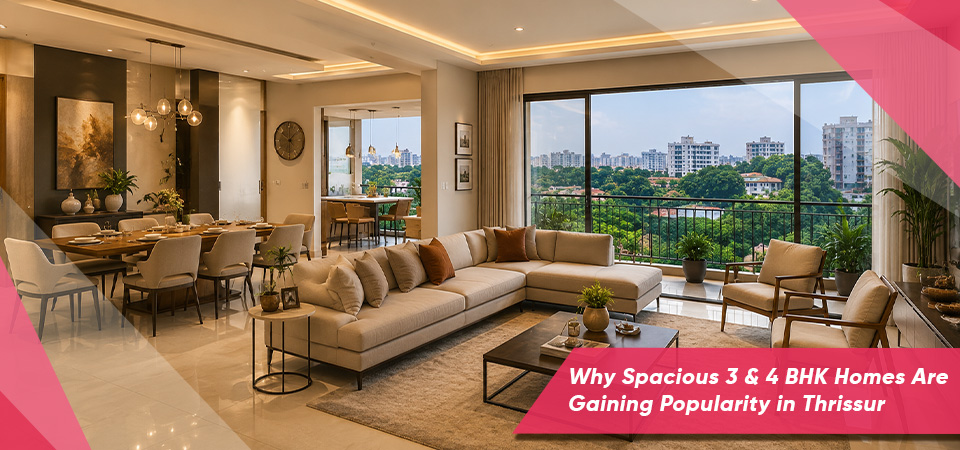
The real estate market trends in Thrissur are showing a growing preference for larger, well-planned homes, particularly 3 and 4 BHK apartments. As homebuyers become more focused on comfort, lifestyle, privacy, and future needs, spacious residences are increasingly becoming a preferred choice. This shift is especially visible among families looking for homes that can accommodate changing lifestyles while offering better value over the years. Changing Family Lifestyles One of the key reasons behind the demand for larger homes is the changing nature of family life. Many families now prefer dedicated spaces for working, studying, entertaining guests, and relaxing. A 3 BHK home provides the flexibility to assign different rooms for different purposes, while a 4 BHK can offer even greater adaptability. For families with children, an additional bedroom can serve as a study room, guest room, or hobby space. This flexibility makes larger homes suitable for different stages of family life without requiring an immediate move to a bigger property. More Space for Work and Privacy The rise of hybrid and remote working has also influenced residential preferences. A separate home office is no longer considered an unnecessary luxury for many professionals. Larger apartments make it easier to create a dedicated workspace away from the distractions of everyday household activities. Privacy is another important consideration. In a spacious 3 or 4 BHK, family members can enjoy personal space while still having comfortable common areas for spending time together. This balance between privacy and togetherness is particularly attractive to modern families. Better Lifestyle and Comfort Homebuyers are increasingly looking beyond the number of bedrooms when evaluating a property. They want spacious living rooms, functional kitchens, balconies, utility areas, and well-designed bedrooms. Larger homes generally provide more room for furniture, storage, and interior customization. This is one reason demand for Luxury Flats is expanding among buyers who want a more comfortable residential experience. Spacious layouts can also make a home feel brighter, less crowded, and easier to organize. Suitable for Growing Families A home is often one of the biggest investments a family makes, so buyers increasingly consider their future requirements before purchasing. A 3 or 4 BHK can accommodate a growing family, elderly parents, or frequent guests without creating space constraints. Instead of purchasing a smaller home and upgrading after a few years, buyers may prefer investing in a larger property from the beginning. This can reduce the inconvenience and costs associated with moving, furnishing another property, and adjusting children to a new environment. Stronger Appeal in Thrissur's Residential Market Thrissur offers a combination of urban conveniences and a relatively relaxed lifestyle, making it attractive to families seeking quality housing. Good connectivity, educational institutions, healthcare facilities, shopping destinations, and essential services contribute to the demand for larger residential properties. As preferences evolve, Builders in Thrissur are responding by developing projects with larger floor plans, better amenities, landscaped surroundings, parking facilities, security systems, and community-oriented spaces. These features help larger apartments appeal to both end-users and buyers considering future resale potential. A Practical Investment Perspective Although a larger apartment generally requires a higher initial investment, buyers may see benefits over the long term. Spacious homes can appeal to a wider range of families, which may support rental demand and resale interest in well-connected locations. For buyers who carefully select the location, construction quality, layout, amenities, and developer reputation, a larger property can offer potential for Long-term Gain. The key is to focus on overall value rather than simply choosing the property with the largest built-up area. Why 4 BHK Homes Are Attracting Premium Buyers While 3 BHK homes remain practical for many families, 4 BHK residences are increasingly appealing to buyers seeking premium living. The additional bedroom provides greater flexibility and can be particularly useful for multigenerational households. A 4 BHK may also include larger living and dining areas, multiple bathrooms, balconies, or additional utility spaces depending on the project. For buyers who prioritize spaciousness and personalization, these features can make the higher investment worthwhile. Choosing the Right Spacious Home When comparing Flats in Thrissur, buyers should look beyond the advertised bedroom count. The actual usability of the floor plan is equally important. Check room dimensions, natural ventilation, storage options, balcony space, parking arrangements, common amenities, maintenance costs, and accessibility. Location should also be considered carefully. A spacious home in a well-connected neighbourhood may provide greater convenience and stronger future demand than a larger property in a poorly connected area. Buyers should therefore balance space, location, construction quality, amenities, and budget before making a decision. Conclusion The growing popularity of 3 and 4 BHK homes in Thrissur reflects a broader shift towards comfortable, flexible, and future-ready living. Families increasingly want homes that can adapt to work, education, guests, changing household sizes, and evolving lifestyles. For prospective buyers, the right spacious home is not simply one with more rooms. It is a property that combines thoughtful planning, quality construction, convenient location, and long-term usability. As residential preferences continue to evolve, larger homes are likely to remain an important segment of Thrissur's housing market. FAQs Why are 3 BHK homes becoming popular in Thrissur?3 BHK homes offer a practical balance of space, privacy, and affordability. They are suitable for growing families and provide additional space for a home office, study room, or guests. Are 4 BHK homes a good investment in Thrissur?4 BHK homes can be a good investment for buyers seeking premium living space and long-term usability. Properties in well-connected locations with quality construction and desirable amenities may also have strong resale and rental potential. What should I consider when buying a spacious home in Thrissur?Consider the property's location, floor plan, ventilation, room sizes, parking, amenities, maintenance costs, construction quality, connectivity, and future development potential before making a purchase.
Read MoreLifestyle or Location: What Are Homebuyers Paying for in Thrissur in 2026?
Posted on Aug 16, 2026
In 2026, the real estate market trends in Thrissur show that homebuyers are becoming more selective about what they pay for. A home is no longer judged only by its distance from the city centre. Buyers are increasingly comparing location with lifestyle features such as amenities, privacy, connectivity, community spaces, and convenience. This shift is creating an interesting question for anyone planning to purchase a property in Thrissur: is the better investment a prime location or a better quality of life? The Changing Priorities of Thrissur Homebuyers Location has traditionally been one of the strongest factors influencing property decisions. Areas with easy access to schools, hospitals, workplaces, shopping centres, and major roads naturally attract buyers. However, modern homebuyers are looking beyond accessibility. The demand for comfortable living spaces, landscaped surroundings, fitness facilities, children's play areas, security, parking, and community amenities is becoming stronger. For many families, paying slightly more for a property that supports their lifestyle can be more appealing than choosing a cheaper home in a highly congested area. This is particularly relevant as new residential projects continue to enter the market. K-RERA records several residential developments currently progressing in Thrissur, indicating continued activity in the city's apartment segment. Why Location Still Matters Despite changing preferences, location remains a fundamental part of property value. A beautifully designed home cannot completely compensate for poor connectivity or limited access to essential services. For example, buyers may compare established areas such as Ayyanthole, Punkunnam, Ollur, and emerging residential locations based on travel time, nearby facilities, road access, and future development potential. Current property data also shows considerable variation in prices between Thrissur localities, demonstrating how strongly location can influence property value. Infrastructure improvements can further affect these decisions. Development projects such as the Ollur Junction rehabilitation and reconstruction package highlight the continuing focus on improving important urban connections. For buyers thinking long term, a well-connected location may also support stronger resale and rental potential. Lifestyle Is Becoming a Valuable Property Feature While location determines where a home is situated, lifestyle determines how people experience it every day. Today's buyers may be willing to pay more for features that make everyday life easier and more enjoyable. Spacious balconies, natural ventilation, landscaped gardens, clubhouses, swimming pools, gyms, co-working spaces, children's areas, and security systems can all influence purchasing decisions. For families, the value may come from having recreational facilities within the community. For professionals, dedicated workspaces and reliable connectivity can be important. Retirees may prioritise peaceful surroundings, healthcare access, and walkable spaces. This means lifestyle is no longer simply a luxury consideration. It is increasingly becoming part of the practical value equation. What Are Buyers Actually Paying For? The answer depends on the buyer's priorities. Someone purchasing a home for daily commuting may place location above everything else. A family planning to stay for decades may give greater importance to space, amenities, schools, neighbourhood quality, and community living. Investors, meanwhile, may evaluate rental demand, resale prospects, infrastructure development, and maintenance costs. The benefits of investing in a well-located property can become stronger when the surrounding area continues to develop and attract residents. The key is to understand that buyers are not necessarily choosing between lifestyle and location. In many cases, they are looking for a combination of both. The Role of Developers in Creating Value Modern Builders And Developers In Kerala are increasingly responding to changing expectations by designing projects around complete living experiences rather than simply providing residential units. New projects can combine convenient locations with amenities, security, green spaces, efficient layouts, and community facilities. This approach allows buyers to evaluate a property based on its overall experience instead of focusing only on its price per square foot. For buyers considering flats in Thrissur, comparing projects based on location, construction quality, amenities, maintenance costs, developer credibility, and future neighbourhood growth can provide a clearer picture of long-term value. A Balanced Approach for 2026 Buyers The best property decision is rarely based on a single factor. Buyers should consider their daily routine, budget, family requirements, future plans, and investment objectives before choosing a property. A home in a premium location may offer excellent accessibility but limited lifestyle features. Another property slightly farther from the city centre could provide better space, amenities, greenery, and privacy. The right choice depends on what creates greater value for the individual buyer. For families thinking about Generational Wealth, property selection should also consider long-term usability, neighbourhood development, resale demand, and the property's ability to remain attractive to future buyers. Conclusion Thrissur's residential market in 2026 reflects a broader change in how people define a good home. Accessibility remains important, but comfort, convenience, community, and quality of life are becoming equally influential. Rather than asking whether lifestyle or location is more important, homebuyers should ask which combination best matches their needs and long-term goals. A thoughtfully chosen property can provide not only a comfortable place to live today but also lasting value for the future. FAQs Are Thrissur homebuyers prioritizing lifestyle over location in 2026?Many homebuyers are giving greater importance to lifestyle features such as amenities, green spaces, security, privacy, and community facilities. However, location remains crucial for connectivity and long-term property value. What factors should I consider when buying a home in Thrissur?Consider location, connectivity, nearby schools and hospitals, construction quality, amenities, maintenance costs, neighbourhood development, resale potential, and whether the property suits your long-term lifestyle needs. Is it better to choose a prime location or a lifestyle-focused residential project?It depends on your priorities. A prime location may offer better accessibility and investment potential, while a lifestyle-focused project can provide greater comfort and amenities. Ideally, buyers should look for a balance between both.
Read MoreWhy Builders in Thrissur Are Turning to Machine Learning for Location Selection
Posted on Aug 13, 2026
Choosing the right location can determine the long-term success of a real estate project. As the real estate market trends in Thrissur continue to evolve, developers are looking beyond traditional methods such as land prices, road access, and population growth. Machine learning is emerging as a powerful technology that helps Builders in Thrissur analyze large amounts of data and identify locations with stronger development and investment potential. Understanding the Role of Machine Learning in Real Estate Machine learning enables computers to identify patterns from large datasets and use those patterns to support better decisions. In real estate, this can include information about property prices, demographics, transportation, infrastructure, employment, consumer preferences, and historical development. Instead of relying entirely on intuition or limited market surveys, developers can use machine learning models to evaluate multiple factors simultaneously. This allows them to compare different locations and understand how each area may perform over time. Analyzing Property Demand More Accurately One of the biggest advantages of machine learning is its ability to analyze property demand. Developers can examine historical sales, rental activity, property searches, demographic changes, and buyer preferences to identify areas where demand is increasing. For example, if data shows that a particular part of Thrissur is experiencing rising household formation, improving connectivity, and increased online searches for homes, machine learning can identify these patterns. Developers can then consider whether the location is suitable for a new residential project. This data-driven approach can be particularly useful when deciding the size, configuration, and positioning of future developments. Evaluating Infrastructure and Connectivity Infrastructure plays a major role in determining property value. Roads, public transportation, schools, hospitals, shopping centres, employment hubs, and recreational facilities can influence how attractive a location becomes. Machine learning can combine information from multiple infrastructure sources to assess accessibility and identify areas that may benefit from upcoming improvements. Developers can study how new roads, transportation projects, commercial developments, or public facilities could influence future housing demand. This helps them move beyond simply asking whether a location is convenient today and instead consider how convenient it could become in the future. Predicting Future Property Values Real estate decisions often involve long investment periods. A location that appears affordable today may experience significant appreciation if infrastructure and economic activity increase. Machine learning models can examine historical price movements alongside economic, demographic, and infrastructure indicators. While no technology can guarantee future property prices, predictive analysis can help developers understand potential scenarios and identify locations showing promising signals. This can reduce uncertainty when evaluating land for residential or mixed-use projects. Understanding Buyer Preferences Modern homebuyers consider more than price and location. They increasingly look for lifestyle features, connectivity, sustainability, convenience, and technology-enabled living. Machine learning can analyze search behaviour, property enquiries, customer feedback, and purchasing patterns to understand what buyers want. For example, data may reveal stronger demand for larger homes, community amenities, work-from-home spaces, or smart Security Systems. Developers can use these insights to design projects that better match local demand instead of following a one-size-fits-all approach. Reducing Investment Risks Selecting land involves substantial financial commitments. Poor location decisions can lead to slower sales, higher marketing expenses, and delayed returns. Machine learning does not eliminate these risks, but it can help developers identify potential warning signs. Factors such as declining demand, limited accessibility, demographic changes, or excessive competition can be incorporated into location analysis. By comparing multiple scenarios before purchasing land, developers can make more informed investment decisions and allocate resources more efficiently. Supporting Better Project Planning Location selection is closely connected to project planning. Once developers understand the characteristics of a target market, they can determine the type of housing that is likely to perform well. For instance, data may indicate growing demand for premium family housing in one area while another location may be more suitable for compact homes or rental-oriented developments. This analysis can influence everything from unit sizes and amenities to pricing and marketing strategies. The growing interest in Apartments in Thrissur also makes data-driven planning increasingly valuable as developers compete to meet changing expectations. The Future of Data-Driven Development Machine learning is unlikely to replace human expertise in real estate. Instead, it can complement the experience of developers, architects, planners, and market analysts. Local knowledge remains important because data may not always capture factors such as neighbourhood character, community preferences, or upcoming changes that have not yet been officially announced. For buyers, projects selected and planned using better data may also create greater value. Features associated with Benefits of Owning 3 BHK Apartments, for example, can be evaluated against actual demand patterns rather than assumptions. Conclusion Machine learning is changing how real estate decisions are approached in Thrissur. By combining market intelligence, infrastructure data, buyer behaviour, and predictive analysis, technology can help developers evaluate locations with greater confidence. As the city continues to develop, data-driven decision-making can support projects that are better aligned with future demand. The combination of technology, local expertise, and careful planning can ultimately contribute to more sustainable and successful real estate development. FAQs How does machine learning help builders select locations in Thrissur?Machine learning analyzes data such as property demand, pricing, infrastructure, demographics, connectivity, and buyer preferences to identify locations with strong development potential. Can machine learning predict future property demand in Thrissur?Yes. Machine learning can analyze historical market data and changing buyer behaviour to identify demand patterns and estimate potential future trends, although it cannot guarantee future outcomes. Why is data-driven location selection important for real estate projects?Data-driven location selection helps developers reduce uncertainty, understand buyer needs, evaluate investment risks, and plan projects that are better suited to the area's future growth.
Read MoreThe Rise of Health-Centric Apartment Living in Thrissur
Posted on Aug 10, 2026
The real estate market trends in Thrissur are increasingly reflecting a major shift in what homebuyers expect from modern residences. While location, pricing, connectivity, and amenities continue to influence property decisions, health and wellness are becoming equally important. Today’s buyers are looking beyond attractive interiors and spacious layouts; they want homes that support physical well-being, mental relaxation, better air quality, and an active lifestyle. What Is Health-Centric Apartment Living? Health-centric apartment living focuses on designing residential spaces around the overall well-being of residents. Instead of treating wellness as an additional luxury, developers are incorporating it into the fundamental planning of residential communities. These homes may feature better ventilation, natural lighting, landscaped surroundings, fitness areas, walking paths, recreational spaces, and thoughtfully designed common areas. The goal is to create an environment where residents can maintain healthier routines without having to leave their community frequently. For families in Thrissur, this approach is particularly appealing because a well-planned home can make everyday routines more comfortable while encouraging healthier lifestyle choices. Why Wellness Is Becoming Important to Homebuyers Modern lifestyles often involve long working hours, extended screen time, traffic, and limited physical activity. As people become more conscious of these challenges, they are looking for residential environments that make wellness easier to achieve. Natural light is one of the simplest examples. Apartments with large windows and thoughtfully positioned openings can allow more daylight into living spaces, creating a brighter and more pleasant indoor environment. Good cross-ventilation can also improve indoor air circulation and reduce dependence on artificial cooling. Green spaces are another important feature. Gardens, landscaped courtyards, walking tracks, and outdoor seating areas can encourage residents to spend more time outdoors and create opportunities for relaxation and social interaction. Key Features of a Health-Focused Apartment Modern residential projects can incorporate several features that support wellness. Natural ventilation: Properly positioned windows and openings can improve airflow and create a fresher indoor environment. Abundant daylight: Large windows, balconies, and open layouts can increase access to natural light during the day. Fitness facilities: Gyms, yoga spaces, multipurpose activity areas, and walking tracks make regular exercise more convenient. Green surroundings: Landscaped gardens and tree-lined pathways can create a calmer atmosphere while improving the visual appeal of the community. Recreational spaces: Indoor and outdoor areas for children, senior citizens, and families can encourage movement and social engagement. Quiet zones: Thoughtfully planned seating areas and landscaped corners can provide residents with peaceful spaces to unwind. These features demonstrate that healthy living can be supported through everyday residential design rather than requiring major lifestyle changes. Benefits of Living in Wellness-Oriented Communities One of the major Benefits of Living in a health-focused apartment community is convenience. Residents can access exercise areas, outdoor spaces, and recreational facilities close to home, reducing the effort required to maintain an active routine. Such communities can also support mental well-being. Natural surroundings, adequate daylight, open spaces, and peaceful common areas can make a residential environment feel less stressful. For families with children and older adults, safe walking areas and recreational facilities can provide additional lifestyle advantages. Another benefit is community interaction. Shared gardens, clubhouses, activity areas, and open spaces create opportunities for neighbours to meet and participate in activities together. This can contribute to a stronger sense of belonging. How Builders Are Responding to the Demand The changing expectations of buyers are encouraging house builders in Kerala to rethink traditional apartment planning. Wellness is gradually becoming part of the overall design strategy rather than simply an optional feature. Developers are exploring larger green areas, improved ventilation systems, fitness facilities, pedestrian-friendly internal layouts, and multipurpose spaces. Some projects are also incorporating smart-home technologies that allow residents to monitor lighting, temperature, and other aspects of their indoor environment. This evolution is particularly relevant in growing urban centres such as Thrissur, where homebuyers increasingly want modern conveniences without compromising their quality of life. What Should Buyers Look For? Homebuyers considering wellness-focused properties should evaluate more than the amenities listed in a brochure. The actual design and usability of these features matter. Check whether apartments receive sufficient natural light and ventilation. Examine the size and accessibility of green spaces. Consider whether fitness and recreational facilities are practical for everyday use. It is also worth assessing noise levels, pedestrian pathways, parking arrangements, water management, and the overall maintenance plan. For buyers exploring apartments for sale in thrissur, comparing these factors can help identify properties that provide long-term lifestyle value rather than simply impressive facilities. The Future of Apartment Living in Thrissur Health-centric residential development is likely to become an increasingly important part of the housing landscape in Thrissur. As buyers become more aware of how their surroundings influence everyday routines, demand may continue to move toward homes that combine comfort, convenience, nature, and wellness. For developers, this presents an opportunity to create communities that are not only visually appealing but also thoughtfully designed around the needs of modern families. For homebuyers, it means more choices when looking for residences that support a balanced and comfortable lifestyle. Conclusion The evolution of apartment living in Thrissur reflects a broader change in homebuyer priorities. A modern residence is no longer viewed simply as a place to live; it is increasingly expected to contribute to comfort, activity, relaxation, and overall quality of life. As wellness becomes a stronger consideration in property decisions, thoughtfully designed residential communities are well positioned to shape the future of urban living in the city. FAQs What is a health-centric apartment? A health-centric apartment is designed to support residents’ physical and mental well-being through features such as natural ventilation, ample daylight, green spaces, fitness facilities, walking paths, and recreational areas. Why are health-focused apartments becoming popular in Thrissur? Homebuyers in Thrissur are increasingly looking for residences that offer more than basic comfort. Better ventilation, green surroundings, fitness facilities, and peaceful spaces can support healthier and more balanced lifestyles. What features should I look for in a wellness-oriented apartment? Look for good natural lighting and ventilation, landscaped gardens, walking areas, fitness facilities, recreational spaces, quiet zones, and well-maintained common areas. These features can improve everyday comfort and lifestyle quality.
Read More